Becoming Starborn in Starfield: A 2026 Player's Guide to the Unity
I still remember the first time I finished Starfield's main quest. After dozens of hours of shipbuilding, faction politics, and scanning frozen moons, I thought I was done. But Bethesda's most provocative promise kept nagging at me: the game does not really start until the main story is over. So I stepped into the Unity, and I became Starborn. In 2026, with more players returning to the Settled Systems and debating the value of New Game Plus, that choice remains one of the most divisive in the game. What does it actually mean to become Starborn? Is it a victory lap, a fresh start, or a punishment? After multiple jumps, I can tell you it is all three.
What I Leave Behind
Crossing the Unity is an act of radical letting go. Everything I owned in my old universe stayed there: my ships, my credits, my weapons, my spacesuits, my carefully hoarded resources, and every odd little souvenir I had picked up along the way. New items eventually take their place, but the loss is immediate and personal. Weapons are a painful exception to any automatic replacement. I had to earn, buy, or loot new ones all over again, and that reset hurt more than I expected.
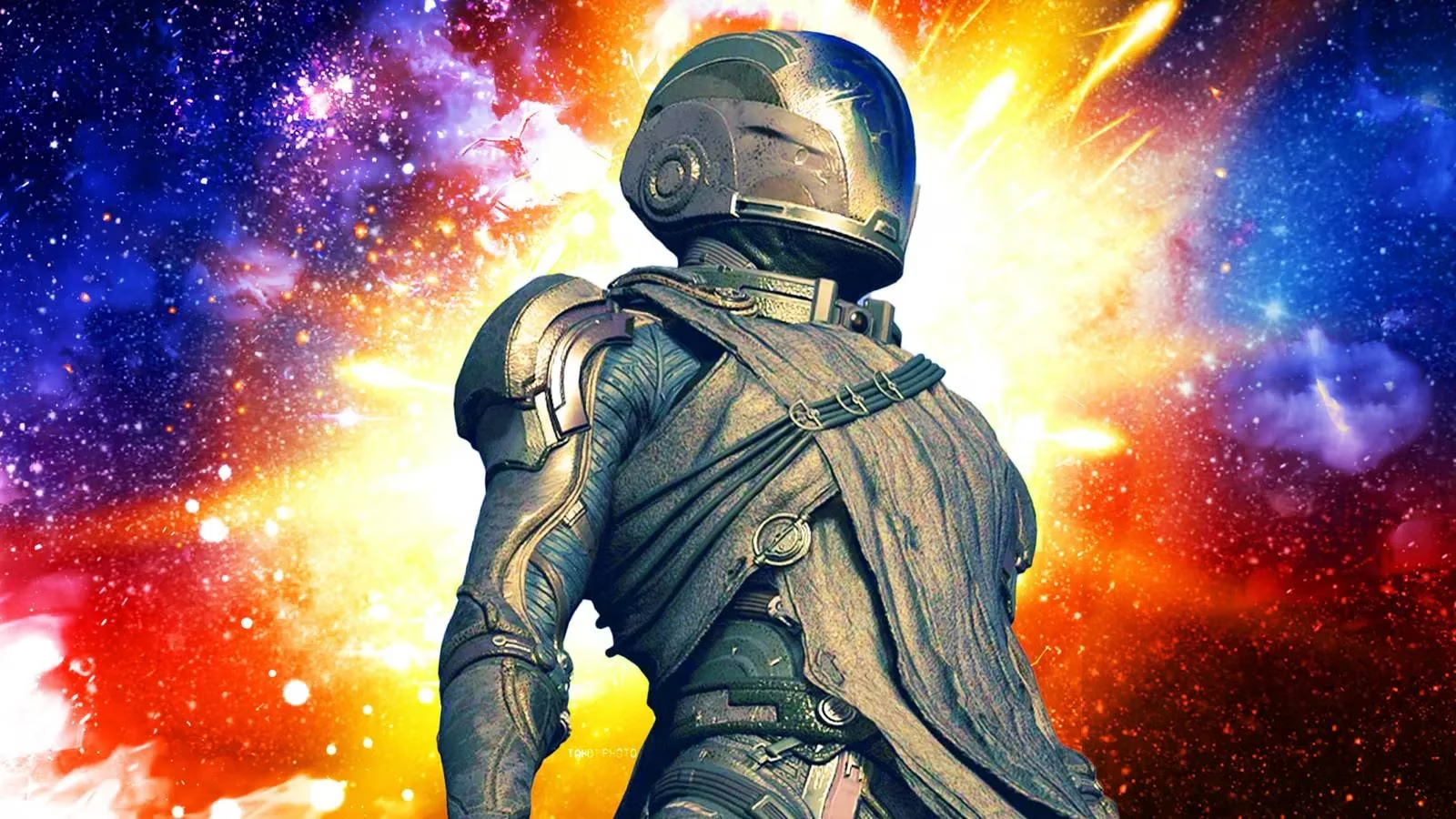
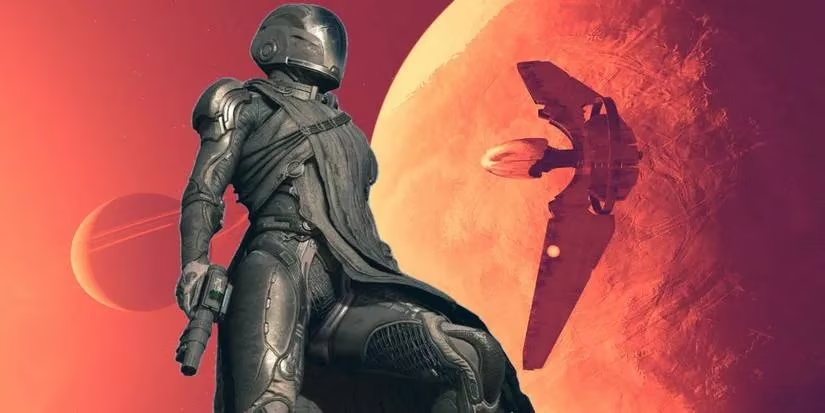
My old ships, including the Razorleaf from the Mantis quest, were gone. In their place, I received the Starborn Guardian. The Frontier also ended up in my Starborn fleet, though how that happens is never explained. I did not complain. I also found myself automatically equipped with the Starborn Astra spacesuit. At first glance, it felt powerful. But because it occupies the spacesuit, helmet, and pack slots all at once, I replaced it fairly quickly once better legendary gear appeared.
The Hunter's Suit and the Eleventh Universe
There is a stranger reward waiting for players who go through the Unity ten times. The Hunter has a unique spacesuit that cannot be acquired simply by killing him. On my eleventh universe, that suit replaced the old Astra armor. It is a significantly better piece of equipment, and it felt like a badge of honor. Still, it eventually became obsolete because it lacks legendary effects. Power in Starfield is never permanent, and the Starborn loop makes that lesson brutally clear.
Powers, Temples, and the Grind
During the main quest, I unlocked Starborn powers like an antigravity field, unlimited oxygen, and the ability to slow time. Each power requires running a repetitive temple puzzle. Only 24 temples exist in each universe, one for each power. Going to a new universe means 24 more temples to run. These temples upgrade existing powers or unlock ones I missed in the first universe. Is it worth repeating the same floating-light puzzle two dozen times? For power-hungry players, yes. For anyone who hates busywork, it is a serious test of patience.
Jumping to a new universe also resets all missions. That means I can replay quests for extra experience. New universes do not typically provide brand-new equipment, but higher levels allow more powerful gear to appear if I had not already reached a high level. There is also a fresh opportunity to add or remove traits. I used one jump to drop a trait I had outgrown and pick up a new benefit. That flexibility is easy to overlook, but it matters.
Foreknowledge and [Starborn] Dialogue
Starfield's main story reveals that countless other universes exist, but many are virtually the same. The Hunter and the Emissary play out their drama so well because they already know what will happen. After going through the Unity, I gained that same foreknowledge. The result is a flood of additional dialogue options tagged with [Starborn]. These options often let me skip quest stages entirely. They are not the only things Starborn can skip, either.
The first objective after going through the Unity is to fly to the Lodge in New Atlantis. I introduced myself to Constellation again, but I also had the choice to restart the main quest or skip it. If I skip it, I can give Constellation the task of finding the undiscovered artifacts using my knowledge of their locations from prior universes. That moment is strange, lonely, and powerful. I have done it both ways, and each choice changes the emotional texture of the run.
What Becoming Starborn Really Means
Becoming Starborn reinforces Starfield's themes in ways that took me several universes to appreciate. Getting the Hunter's armor after ten jumps symbolizes that I have become the Hunter, searching across realities for power. Alternatively, I can decide that this universe is the last one I will call home. The game never forces that answer. It simply asks the question.
So should you cross the Unity in 2026? If you love Starfield's combat, exploration, and power fantasy, the answer is probably yes. If you are deeply attached to your ships, outposts, and loot, the answer may be no. The game asks you to let go. I ask myself each time: am I chasing power, or am I looking for a home? That, more than any suit or ship, is the real Starborn question.