Former Bethesda Dev Reveals Starfield's Surprising Loading Screen Evolution
In the vast, starry expanse of modern gaming, few launch controversies have lingered as persistently as those surrounding Bethesda's 2023 space epic, Starfield. While critics praised its ambitious scope, a significant portion of the player base found their immersion repeatedly shattered by a seemingly archaic feature: frequent loading screens. These transitions, especially within bustling cityscapes like the cyberpunk haven of Neon, became a defining point of criticism. Yet, a recent revelation from a former developer suggests this wasn't always the intended fate for the game. Nate Purkeypile, who worked on Starfield until 2021, expressed genuine surprise at the final density of loading zones, claiming the game "could have existed" with significantly fewer, hinting at a different path not taken.
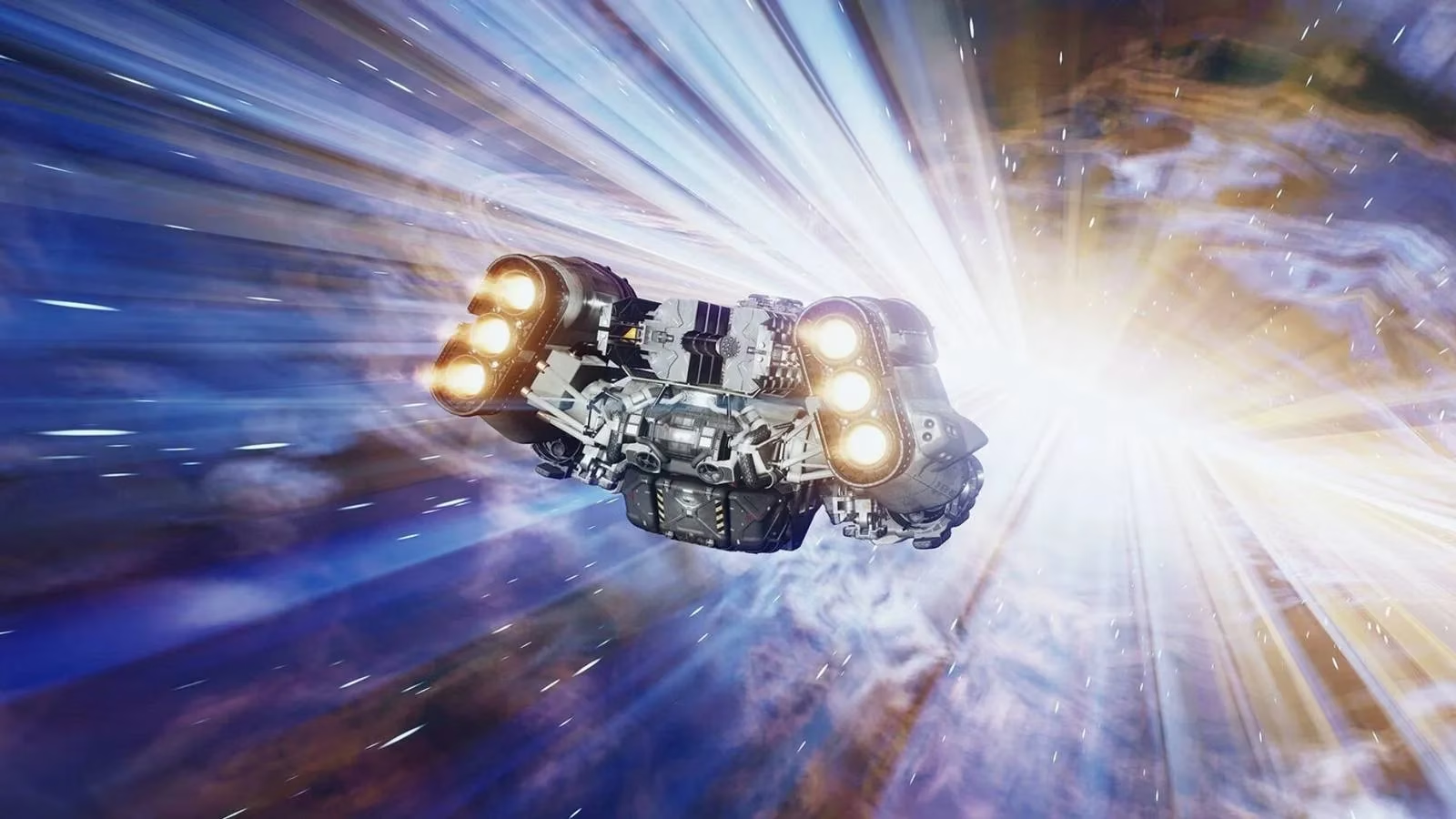
The Developer's Perspective: A Different Vision
Nate Purkeypile's tenure on the project painted a picture of a more seamless universe. During his time, the segmentation of areas, particularly the iconic cities he helped craft, was far less pronounced. "Some of those [loading zones] were not there when I had been working on it," Purkeypile explained, highlighting the late-stage introduction of many barriers that would later frustrate players. His comments point directly to the technical heart of Bethesda's development: the Creation Engine. The decision to gate areas, as Purkeypile indicates, was largely a performance compromise. The engine's architecture, while powerful for building complex, interactive worlds, seemingly necessitated these divisions to maintain stability in the final, dense product—a trade-off between seamless exploration and technical reliability that was decided late in the development cycle.
The Player Experience: Immersion vs. Interruption
For gamers, the result was a universe that felt paradoxically both vast and compartmentalized. The dream of freely wandering from a spaceship's cockpit into a sprawling city plaza was often interrupted by a loading screen. This design choice stood in stark contrast to the open-world fluidity offered by many contemporary titles. The criticism wasn't merely about waiting a few seconds; it was about the broken promise of a truly continuous exploratory experience. The table below summarizes the core conflict:
| Aspect | Developer Intent (Per Purkeypile) | Player Experience |
|---|---|---|
| World Flow | Initially more seamless, fewer zones | Heavily segmented by loading screens |
| Primary Cause | Late-stage performance optimization for Creation Engine | Perceived as an outdated technical limitation |
| Impact | Stable performance for complex areas | Broken immersion, criticized as "shallow" |
Bethesda's Ongoing Mission: Post-Launch Support
Despite the controversy, Bethesda's journey with Starfield did not end at launch. Over a year later, the team has been diligently working to improve the experience. Numerous updates have been deployed, focusing on:
-
Performance Boosts: Optimizations to make the existing world run more smoothly.
-
Bug Remediation: Squashing countless glitches that plagued early players.
-
New Content: Expanding the universe with fresh stories and items, often for free.
A prime example of this support was the free "At Hell's Gate" quest added earlier in December, celebrating the Doom franchise's 31st anniversary. This update allowed players to embark on a demon-slaying side adventure and claim iconic gear like the Super Shotgun and the Doom Slayer Praetor Suit, showing Bethesda's commitment to enriching the game world long after release.
Looking to the Horizon: The Legacy for The Elder Scrolls VI
The story of Starfield's loading screens is now a crucial case study for Bethesda. As the gaming community looks toward the distant horizon and the promised land of The Elder Scrolls VI—announced back in 2018 but still shrouded in mystery—the lessons from 2023 are clear. Players are now, more than ever, patiently yet keenly awaiting signs that the next adventure will learn from these compromises. The hope is that the technological foundations laid during Starfield's ongoing support, and perhaps even engine evolutions, will allow the rich, dense provinces of Tamriel to be explored with the uninterrupted flow that modern gamers expect. The question hanging in the air isn't just about dragons or ancient prophecies; it's about whether players will be able to chase them without hitting a loading screen. 🤔
Ultimately, Purkeypile's insight provides a fascinating glimpse into the complex realities of game development, where vision, technology, and performance are in constant negotiation. Starfield remains a monumental, if divisive, achievement—a game that reached for the stars but, in the eyes of many, got tethered by technical necessities added at the eleventh hour. Its legacy will undoubtedly influence how Bethesda builds worlds for years to come.