My Starfield Journey: Tech Marvel Meets Lonely Cosmos
I still remember the first time I stepped out of the airlock in Starfield, the crimson glow of a distant nebula painting my visor. It was late 2023, and like many, I had been waiting years for Bethesda’s next universe. Two years, several patches, and one major expansion later, my feelings are as vast and contradictory as the Settled Systems themselves. Starfield is a game that dares you to fall in love with silence, then occasionally rewards you with a breathtaking sunrise over a procedurally generated moon. It’s a technical marvel, a lonely drift, and—dare I say—a piece of art that refuses to be just one thing.
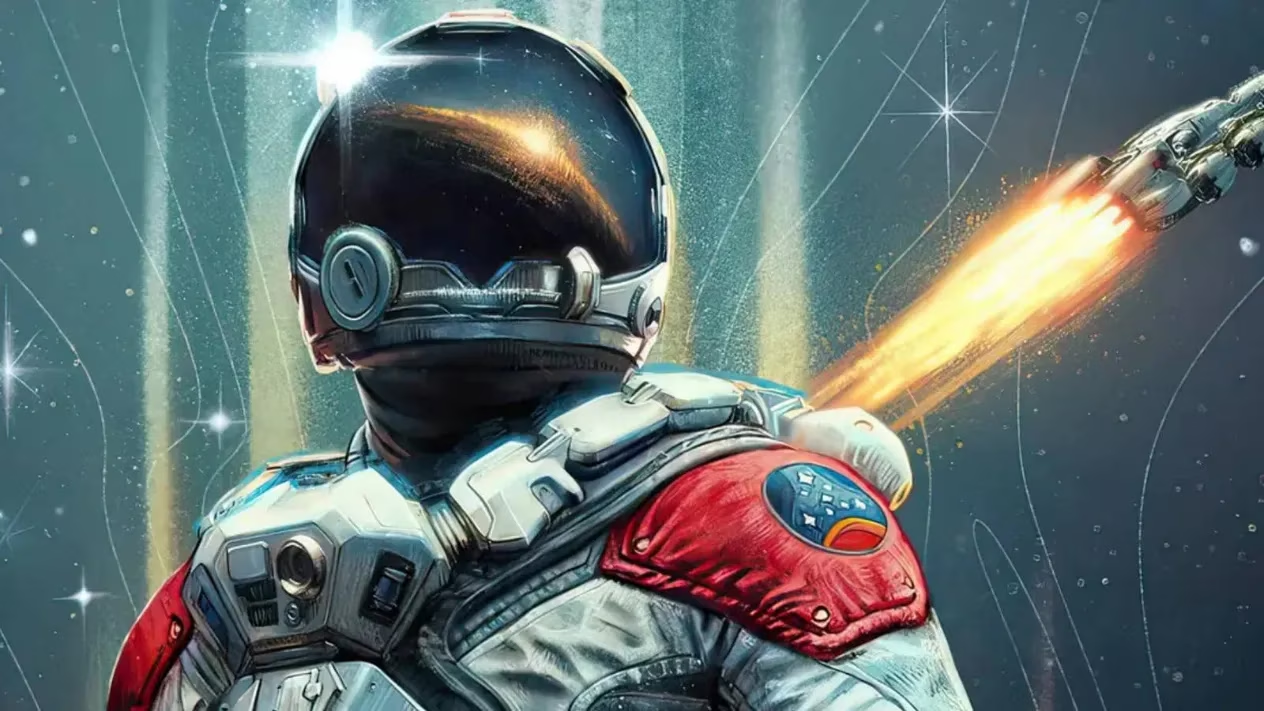
When I heard lead writer Emil Pagliarulo call Starfield "the hardest thing Bethesda has ever done," it resonated with my own experience. I wasn't just playing an RPG; I was witnessing a studio wrestle with scale. In a 2024 interview, Pagliarulo said, "We pushed ourselves to make something totally different… the biggest, richest space simulation RPG anyone could imagine." He also claimed it was "the best game we've ever made." That's massive praise from the house that built Morrowind and Skyrim. For me, that ambition is palpable every time I boost-pack across a low-gravity outpost or watch my ship automatically dock with a starstation through a seamless animation. The sheer engineering behind loading an entire planet onto an Xbox without a loading screen—except those we’ve learned to live with—feels like a conjuration trick from the College of Winterhold.
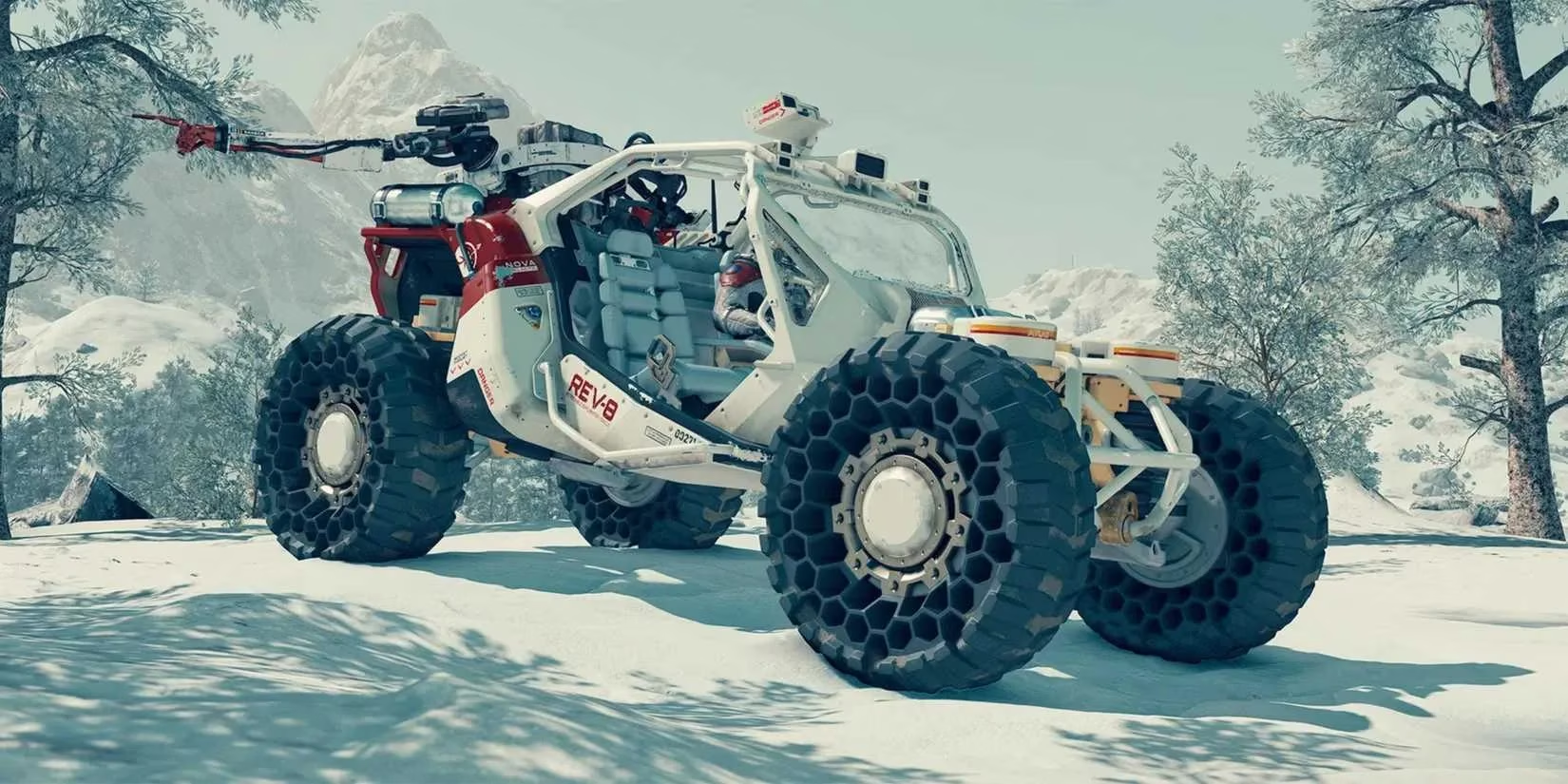
But ambition has a shadow. The same technical marvels that allow me to land on a barren ice world also mean I might wander for fifteen minutes and find nothing but repeated geological nodes. I’ve scanned countless alien creatures, collected organic resources, and built outposts that hum quietly under alien skies. Yet the question echoes: am I exploring, or am I just traversing? The REV-8 vehicle, added in a 2024 update, gave me a dune-buggy to race across deserts, kicking up dust and making traversal genuinely fun. Still, many planets remain beautiful, empty canvases. This push-pull defines my Starfield identity. I’m a pioneer in a universe that often feels like a museum of potential.
The Shattered Space expansion, released in late 2024, promised a handcrafted horror-tinged journey on the enigmatic Va’ruun homeworld. I dove into it hoping for the narrative density that Skyrim’s Dawnguard offered. The reality was more mixed. Steam reviews at the time painted a picture of a DLC that was atmospheric but uneven, a compact story that never fully escaped the gravitational pull of the base game’s pacing issues. Yet, walking through the dimly lit corridors of Dazra, listening to whispered sermons of the Great Serpent, I felt a spark of something deeply Bethesda—a sense of melancholy mystery that reminded me of Morrowind’s Ashlands. It wasn't the evolution I craved, but it confirmed Bethesda was listening.
Community feedback has shaped my ongoing journey significantly. In an interview, lead creative producer Tim Lamb said, "We listen to the community, we hear the feedback. But for us, we’re our own toughest critics." Over the past two years, I’ve seen that philosophy manifest: quality-of-life updates like city maps, performance modes for consoles, and the aforementioned REV-8. Mods, of course, have filled the galaxy with life. By 2026, my game is a Frankenstein’s monster of survival mechanics, dynamic weather, and populated space encounters, showing that the core framework is a fertile ground for innovation. The base game’s unique personality—its fusion of NASA-punk aesthetics, quiet contemplation, and faction intrigue—now sits comfortably alongside my memories of Tamriel and the Wasteland.
Does Starfield replace Skyrim in my heart? No. But it doesn’t need to. It’s a different beast: a slow-burn collection of star systems where I chart blueprints of my own fun. I’ve spent hours in shipbuilder, crafting asymmetrical frigates and nimble interceptors. I’ve role-played as a xenobiologist cataloging fauna with a notepad outside the game. I’ve painstakingly decorated a lakeside outpost to watch a ringed planet rise. These are moments of profound personal achievement, the kind that Bethesda games have always cultivated, but set against the stark silence of space.
As I look back from 2026, I appreciate Starfield not for what it could have been, but for what it stubbornly is: an enormous, flawed, hypnotic playground. It’s a conversation piece about the cost of procedural ambition and the meaning of exploration. Whether I’m boosting through an ice canyon in my REV-8 or standing in a derelict ship listening to an audio log, I’m engaged in Bethesda’s toughest project. And surprisingly, that struggle is what makes the journey feel so human. The stars, after all, never promised to be interesting—we have to find our own reasons to keep looking up.
Data referenced from SteamDB helps contextualize how Starfield’s long tail is shaped less by launch-week hype and more by sustained update cycles: as patches and expansions land, shifts in player concurrency and engagement patterns often mirror the community’s evolving relationship with that “quiet cosmos” you describe—returning to test new traversal tools, content drops, and mod-driven overhauls, then drifting away again when the procedural emptiness starts to outweigh the wonder.