Starfield After Two Years: A Comfortable Distraction, Not a Revolution
When Starfield launched in 2023, it arrived during a moment of massive anticipation. Bethesda's legacy with Morrowind, Oblivion, Skyrim, and Fallout 3 gave the project enormous weight. The marketing leaned into that history, promising a galaxy-scale journey rather than a typical open-world map. In a pre-release interview with The New York Times, managing director Ashley Cheng addressed concerns about barren planets by saying: "When the astronauts went to the moon, there was nothing there. They certainly weren't bored."
That quote has become something of a Rorschach test. For some, it captured the lonely beauty of space. For others, it foreshadowed the game's central weakness: vast spaces that could feel empty and routine. A casual Bethesda fan, however, may have had lower expectations. After the uneven launch of Fallout 76 and years of open-world fatigue, Starfield only needed to be a comfortable distraction.
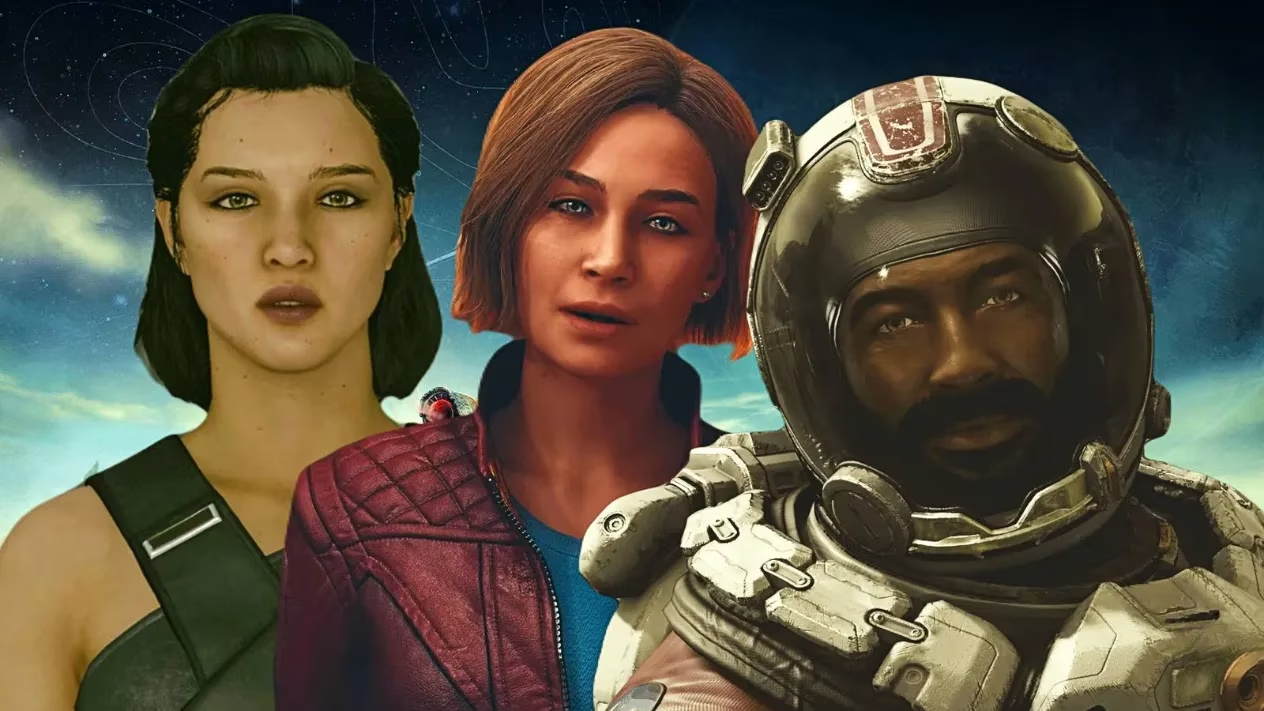
For that player, Starfield largely works. It offers the familiar Bethesda loop of mission selection, fast travel, combat, and loot collection. Yet as the game enters its third year in 2026, many players still describe it as a title they enjoy in short bursts but rarely think about after turning it off. That response is not necessarily failure. It is closer to how some experienced Fallout 4: a reliable, low-stakes source of evening entertainment.
The Open-World Problem
Starfield arrived long after the open-world genre had begun to stagnate. In the decade following Skyrim, dozens of studios adopted the same sprawling structure. Games such as The Legend of Zelda: Breath of the Wild and Elden Ring managed to stand out by reshaping the formula, but many others collapsed under their own size. Bethesda, meanwhile, continued using an evolved version of the technology that powered Skyrim nearly 15 years ago.
That consistency creates a double-edged sword. Fans still expect every Bethesda release to be as immersive and revolutionary as Oblivion. Starfield could not meet that standard for everyone. Its structure is fragmented by loading screens, and its space travel is less free-roaming adventure and more menu-driven fast travel. Those interruptions pull players out of the fantasy of exploring the stars.
Where Starfield Falls Short
The most common criticism remains the lack of truly free space flight. Players can customize ships and engage in limited combat encounters, but journeying between planets often means navigating a sequence of loading screens. For a game marketed on the wonder of space travel, that is a significant missed opportunity.
Another issue is procedural generation. While many locations look striking, repeated caves, research stations, and outposts can blur together. Hand-crafted dungeons and environmental storytelling, hallmarks of earlier Bethesda titles, are less frequent. Loot also suffers. Procedurally generated weapons and scattered crafting materials do not always provide the same satisfaction as unique rewards.
Signs of Improvement
Despite those problems, Starfield has improved since its 2023 launch. One major addition was the Rev-8 land rover. The vehicle lets players cross planetary surfaces more quickly, making it easier to ignore repetitive landmarks and focus on meaningful destinations. It does not replace true space exploration, but it makes planetary travel more engaging.
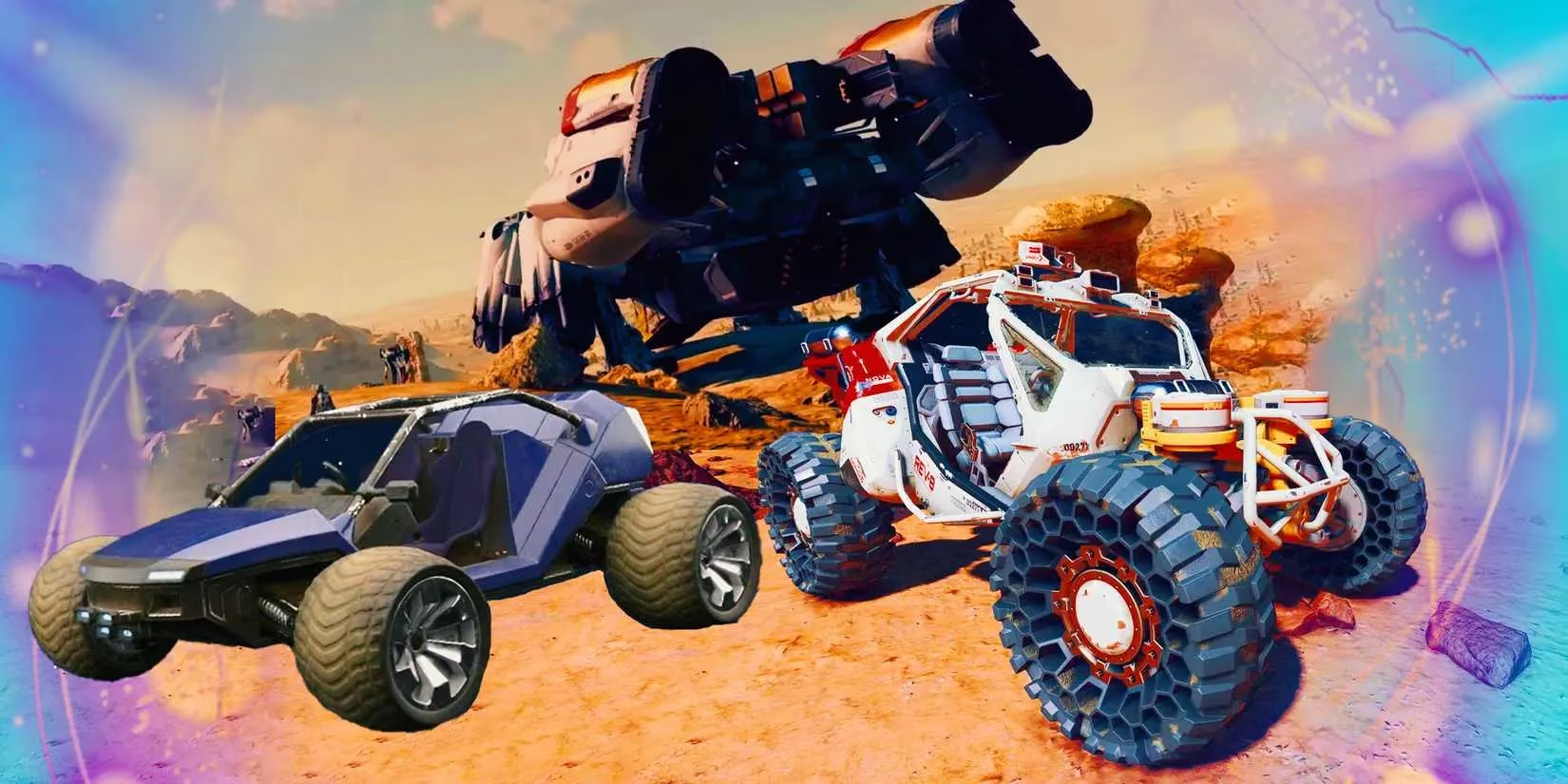
The surface map update also addressed a long-standing complaint. Early maps were difficult to read, but revised aerial views made city navigation far more usable. Combined with numerous bug fixes, these changes suggest Bethesda is paying attention to player feedback.
The Shattered Space Expansion
The first major expansion, Shattered Space, launched in September 2024 and focused on House Va'ruun, one of the base game's greatest mysteries. It added more hand-crafted content and pushed toward a horror-tinged atmosphere involving otherworldly beings. For players who wanted less procedural repetition, that was a welcome shift.
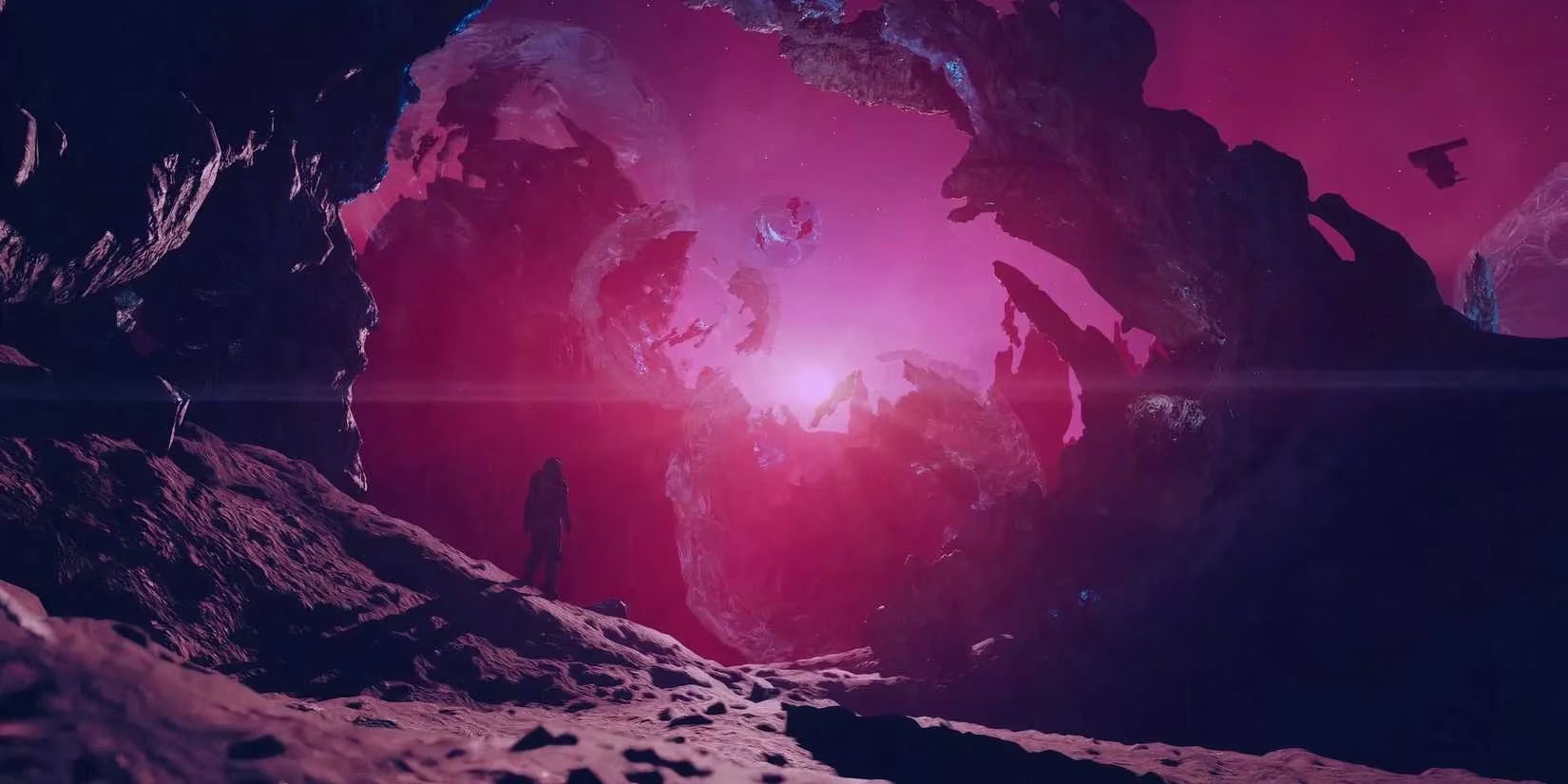
As of 2026, Starfield remains a work in progress. Bethesda has indicated plans for further expansions, and each update has nudged the game closer to the experience many players originally wanted. That long-term support matters. Starfield may never rival Skyrim in cultural footprint, but it has established a foundation that could keep players returning.
A Final Verdict
For a casual Bethesda fan, Starfield succeeded in one important way: it provided a massive, occasionally messy galaxy to drift through. It did not revolutionize space games, and its fragmented travel system still disappoints. But the game has responded to criticism with real updates, and Shattered Space suggested that Bethesda understands the need for more crafted content.
Two years on, Starfield is not everything every player wanted. It is, however, a better game than it was at launch. That trajectory matters more than any single launch-day verdict.