Starfield in 2026: The REV-8, Missing Features, and a Sinking Ship
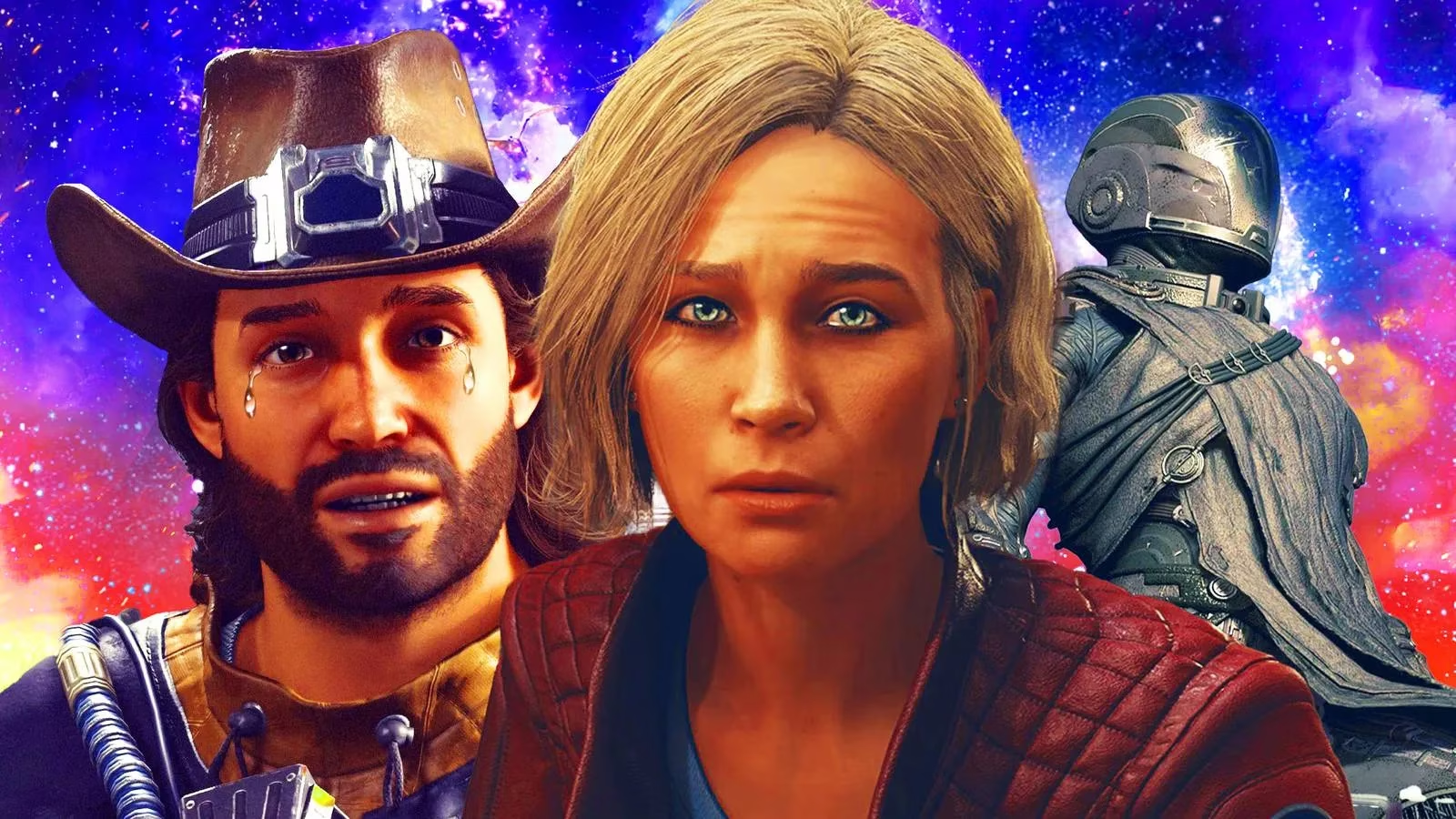
In 2026, Starfield is still the space RPG that everyone wanted to love and almost nobody can stop debating. Bethesda's big cosmic adventure touched down in September 2023 with sky-high expectations, and for a hot minute, it looked like it might be the next Skyrim. Fast forward to now, though, and the vibe is more 'meh' than 'magnum opus.' Steam reviews remain mixed, the player count has cooled off, and even the free content updates feel like Bethesda is playing catch-up rather than leading the pack. As one player might put it, the game is stuck between a rock and a hard place — or, more accurately, between a thousand empty planets and a dune buggy that showed up fashionably late.
The REV-8: Better Late Than Never?
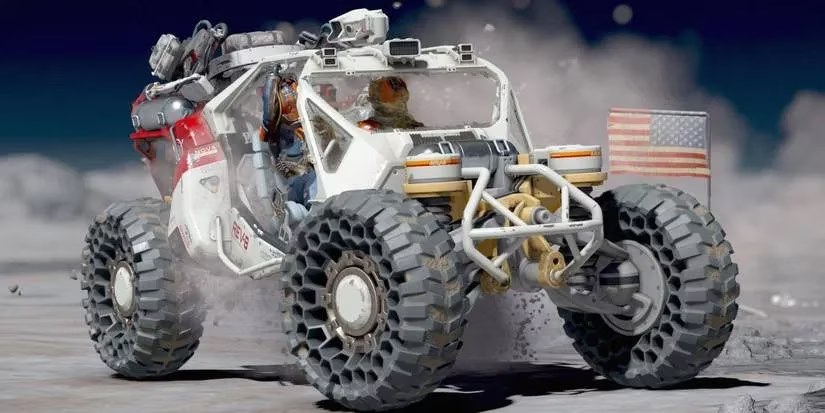
The REV-8 is Bethesda's answer to one of Starfield's most common complaints: ground traversal is a snooze. It is a dune buggy that players can deploy on any planet, and it comes with jet boosters, turrets, and hydraulics for hopping across rocky dunes. On paper, it is a blast. In practice, it helps — but only a little. The REV-8 makes long walks less tedious, yet it does not solve the deeper problem: too many planets are large, empty, and utterly forgettable. The buggy is a bandage on a bullet wound. It should have been in the game from day one, not added almost a year after launch. That delay says a lot about modern game development, and none of it is flattering.
A Launch That Still Haunts the Game
Starfield's biggest sin was not that it was bad. It was that it felt incomplete. Players noticed missing features, bugs, and that classic Bethesda jank. Compare that to Baldur's Gate 3, which also launched in 2023 and kept getting meaty updates. The difference? Larian's game felt like a full meal at launch; Starfield felt like an appetizer with a note promising the rest later. If Starfield had shipped with the REV-8, better AI, and fewer rough edges, it could have been the flagship for Bethesda's Creation Engine 2. It could have built hype for the studio's next decade. Instead, SteamDB comparisons show Skyrim and Fallout 4 still outperforming Starfield on Steam. Ouch.
What the Community Is Saying in 2026
Third-person observers and longtime fans alike have not been shy. The community's mood can be summed up with a few recurring points:
-
🚀 The REV-8 is fun, but it feels like a patch, not a revelation.
-
🌌 Planets are too empty to make exploration rewarding.
-
🐛 Bugs and glitches still pop up like unwanted party guests.
-
📉 Player numbers have not recovered to launch highs.
-
🔁 Retroactive content feels like homework, not a bonus.
Here is a quick breakdown of the core issues:
| Issue | Why It Matters | What It Says |
|---|---|---|
| Empty planets | Exploration feels like a chore | Scale without density is not fun |
| Late REV-8 | Traversal fix arrived months later | The game shipped unfinished |
| Bugs and jank | Breaks immersion | Bethesda's old habits die hard |
| Strong competition | Skyrim and Fallout 4 still beat it | Nostalgia is tough to top |
| Mixed reviews | Word of mouth stays sour | First impressions are forever |
The Sinking Ship Metaphor
It is tough to say this, but Starfield often feels like a sinking ship. Bethesda keeps bailing water with free updates, and the REV-8 is a genuinely useful bucket. Yet players who already jumped overboard are not rushing back. The vehicle does not fix the emptiness, the repetitive points of interest, or the sense that the game is a mile wide and an inch deep. It is better to have the REV-8 than not, sure. But it will not be enough to bring back a crowd when it could have kept that crowd from leaving in the first place. As of 2026, the lesson is clear: launch complete, or prepare for a long, uphill climb.
Final Thoughts
Bethesda deserves credit for supporting Starfield instead of abandoning it. Free content is free content, and the REV-8 is a step in the right direction. But the industry has changed. Players are pickier, review scores stick like glue, and 'we will fix it later' is a risky bet. Starfield could have been a flagship. Instead, it is a cautionary tale about post-launch promises. The stars were the limit, but the game is still stuck in orbit.