Starfield's Future: Returning to its Sci-Fi Roots After Shattered Space
Looking back from 2026, I can see the journey Starfield has taken. Bethesda's massive sci-fi RPG, their first new universe in decades, promised a galaxy of endless discovery. It was a bold departure from the fantasy of Tamriel and the post-apocalypse of the Commonwealth, aiming for a more grounded, "NASA-punk" vision of humanity's future among the stars. While its launch was met with divided opinions on its sprawling, sometimes repetitive, generated worlds and storytelling, it carved out its own success, becoming a top seller. The commitment from Bethesda was always clear: to support and evolve this universe for the long haul, much like they did with Skyrim. The release of the Shattered Space expansion in late 2024 was the first major test of that vision, taking players into a bold and unsettling new direction.
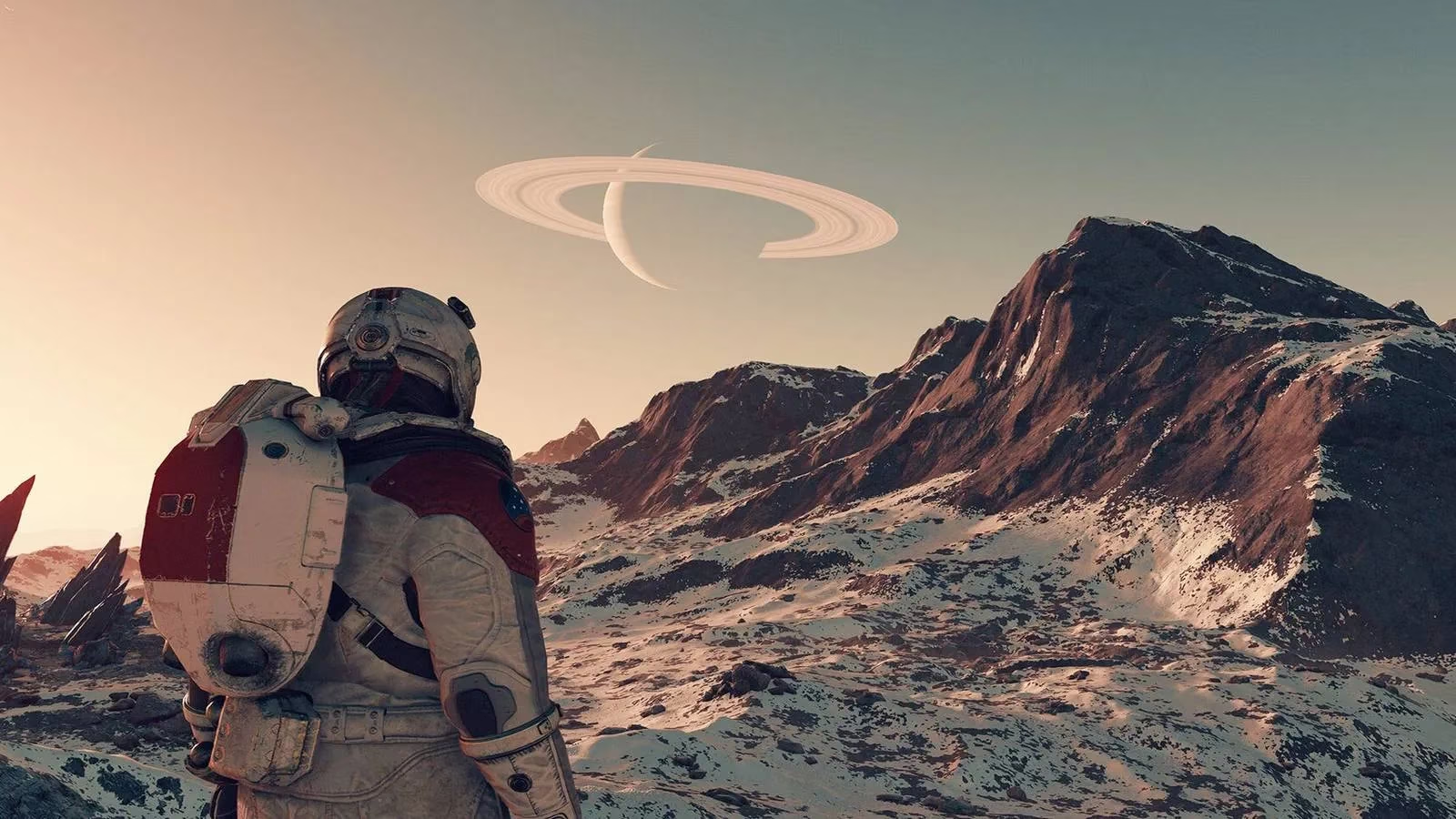
Shattered Space was a fascinating, if jarring, experiment. For me, diving into that DLC felt like stepping into a different game altogether. It fully embraced the enigmatic and terrifying lore of House Va'ruun, a faction only hinted at in the base game, and plunged headfirst into cosmic horror. The shift from Starfield's relatively realistic, tech-driven atmosphere to one of ancient dread and alien nightmares was stark. It was well-executed and provided a unique, hand-crafted planet that stood out from the proc-gen landscapes, but it also highlighted a tension within the game's identity. Now, with that experiment concluded, I believe the path forward is to return to and deepen the core sci-fi experience that defined Starfield's initial appeal.
The foundation is incredibly strong. The revelation of the Starborn and the multiverse at the end of the main campaign wasn't just a plot twist; it was a narrative engine with infinite potential. Future content doesn't need to leave sci-fi behind to be interesting. Imagine DLC that explores:
-
A humorous universe where the Constellation is a group of bumbling, overconfident explorers.
-
A dystopian timeline where one faction, like the United Colonies, achieved total galactic dominance.
-
A universe where the core conflict between the Freestar Collective and the UC never ended, creating a perpetually war-torn galaxy.
This approach allows for genre-bending—touching on comedy, dystopian thriller, or war drama—while remaining firmly anchored in the sci-fi multiverse concept. It expands the possibilities without abandoning the established tone.
Furthermore, the base game's major factions still have so many stories to tell. My time with Ryujin Industries was full of corporate intrigue, but it felt like just the beginning. A full DLC focused on high-stakes corporate espionage, boardroom power plays, and cybernetic enhancements would fit the NASA-punk aesthetic perfectly. Similarly, delving deeper into the Freestar Collective's frontier justice or the UC's bureaucratic might could provide rich, grounded narratives. Shattered Space proved Bethesda can create excellent bespoke content; applying that focus to the existing world's pillars would be a powerful next step.
Ultimately, the success of Shattered Space gives Bethesda valuable data. Players enjoyed the quality of a handcrafted experience, even if the genre shift was significant. The next expansion can learn from this. The goal shouldn't be to shock with another radical departure, but to master and expand what already works. By returning to a more grounded sci-fi atmosphere, exploring the multiverse's myriad possibilities, and fleshing out the factions and worlds that define the Settled Systems, Starfield can solidify its unique identity. It can offer the depth of a hand-touched world while maintaining the awe-inspiring scale of its galactic promise. For me, that's the future I'm most excited to explore: one that feels like a natural and deeper evolution of the universe I first stepped into, not a detour away from it.