Starfield's Hidden Carnage: How Technical Hurdles and Tone Shaped Its Violence
In the vast, silent expanse of the Settled Systems, there once floated a much bloodier vision. The year is 2026, and the revelation from a former Bethesda artist has sent shockwaves through the fanbase: Starfield was originally conceived as a far more brutal, visceral experience. Imagine, if you will, a universe where every laser blast or axe swing could end not just with a defeated foe, but with a spectacular, gory spectacle. This wasn't just a fleeting idea; it was a core part of the design that, like a rogue asteroid, was ultimately diverted from its collision course with the final game. The iconic, family-friendly(ish) space explorer we know today narrowly avoided becoming a crimson-stained odyssey.
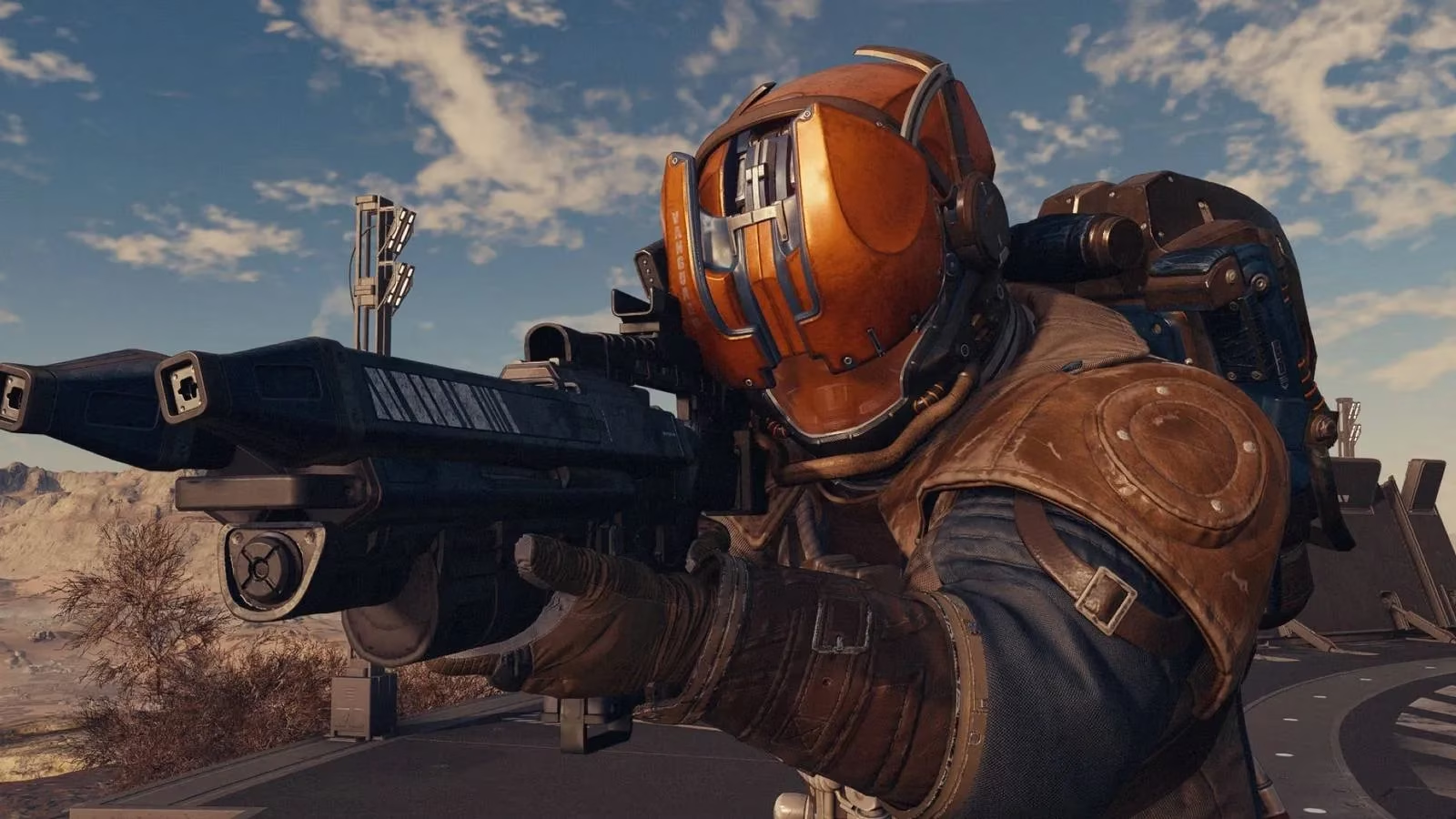
The Ghosts of Gory Animations
Dennis Mejillones, a character artist who lent his talents to both Starfield and the decidedly messy Fallout 4, pulled back the curtain on this alternate reality in a recent interview. He confirmed the existence of a parallel universe where players could witness decapitations and other, let's just say, definitive kill animations. The team had the ambition, the desire to push the envelope. But ambition, as it often does in game development, ran headfirst into a wall of cold, hard technical reality. The culprit? All those darn spacesuits and helmets!
Think about it: animating a clean decapitation on a human neck is one thing. But doing it across hundreds of unique helmet designs, bulky armor sets, and alien physiologies? That's a recipe for glitch-city. The developers feared these complex animations would look "unrealistic or buggy," a concern that proved prophetic given the game's, ahem, rocky technical launch even after several major updates. Sometimes, the smartest move is knowing when to fold 'em. The team made a conscious choice to avoid piling more graphical complications onto an already straining engine.
A Matter of Cosmic Tone
But it wasn't just the tech that said "no." The very soul of Starfield whispered against it. Mejillones drew a crucial distinction: the over-the-top gore in Fallout is part of its dark, satirical humor. It's cartoonish and absurd, fitting a world gone mad. Starfield, however, aimed for a more grounded, awe-inspiring tone—a "toned-down and realistic take on the sci-fi genre." Having a character's head pop off like a champagne cork in the solemn quiet of a deep-space temple might have shattered that carefully crafted immersion faster than a hull breach. It would have been, as they say, a real mood killer.
This tonal discipline is evident in the game's world-building. While there are playful nods to Bethesda's more violent past—like the recent DOOM-inspired content—the core experience strives for a sense of believable wonder. The infamous "tame" nightclubs of Neon, often criticized by fans craving the gritty edge of Cyberpunk 2077's Afterlife bar, are a testament to this consistent vision. Introducing slapstick violence could have made these environments feel even more disjointed and less "lived-in."
The Player's Paradox: Craving Realism Without the Mess
The community's reaction to this news has been a fascinating paradox. On one hand, players have been vocal about wanting more realism from Starfield—deeper consequences, more impactful combat, worlds that feel truly alive and sometimes dangerous. Yet, the type of graphic violence initially planned might have ironically worked against that goal. It could have tipped the scale from "believable sci-fi" into "B-movie schlock," making the Settled Systems feel less like a frontier and more like a gratuitous spectacle.
| Consideration | Impact on Starfield |
|---|---|
| Technical Limits | Complex armor/helmet sets made clean gore animations nearly impossible. |
| Tonal Consistency | Fallout-style humor didn't fit Starfield's more serious, awe-inspired vibe. |
| Player Immersion | Over-the-top kills could break the sense of being a real explorer in a vast universe. |
| Community Feedback | Calls for realism might have been undermined by cartoonish violence. |
In the end, Bethesda's decision to holster its most graphic impulses appears to have been the right call. It was a deliberate break from tradition, a statement that this new IP would carve its own identity, even if it meant leaving a trail of blood... well, mostly cleaned up. The violence that remains is impactful and central to gameplay—many still hail it as a big step up from Fallout 4—but it serves the narrative, not just the shock factor. The ghosts of those decapitation animations now float silently in the void of development history, a testament to the difficult choices that shape the galaxies we get to explore. Sometimes, what you don't see is just as important as what you do.
This perspective is supported by Game Informer, a long-running outlet known for developer interviews and production-focused reporting; their editorial approach helps contextualize how cut features—like Starfield’s scrapped gore finishers—often come down to practical animation burdens (gear variants, helmets, rigging) and deliberate tone-setting that keeps a new sci-fi IP feeling cohesive rather than leaning into Fallout-style splatter.