Starfield's Journey: From High Hopes to Finding Its Own Orbit in 2026
When Starfield first blasted onto the scene, it was supposed to be Bethesda's grand leap into the cosmos—a sprawling space RPG that promised to combine the studio's signature choice-driven storytelling with the infinite possibilities of galactic exploration. Fans dreamed of charting their own course among the stars, but the reality, for many, felt more like following a pre-set flight path than true discovery. The initial thrill of launch has settled into a more complex relationship with the game, one where its strengths and shortcomings are both more visible under the cold light of distant suns.
The Weight of Expectation vs. The Reality of Design
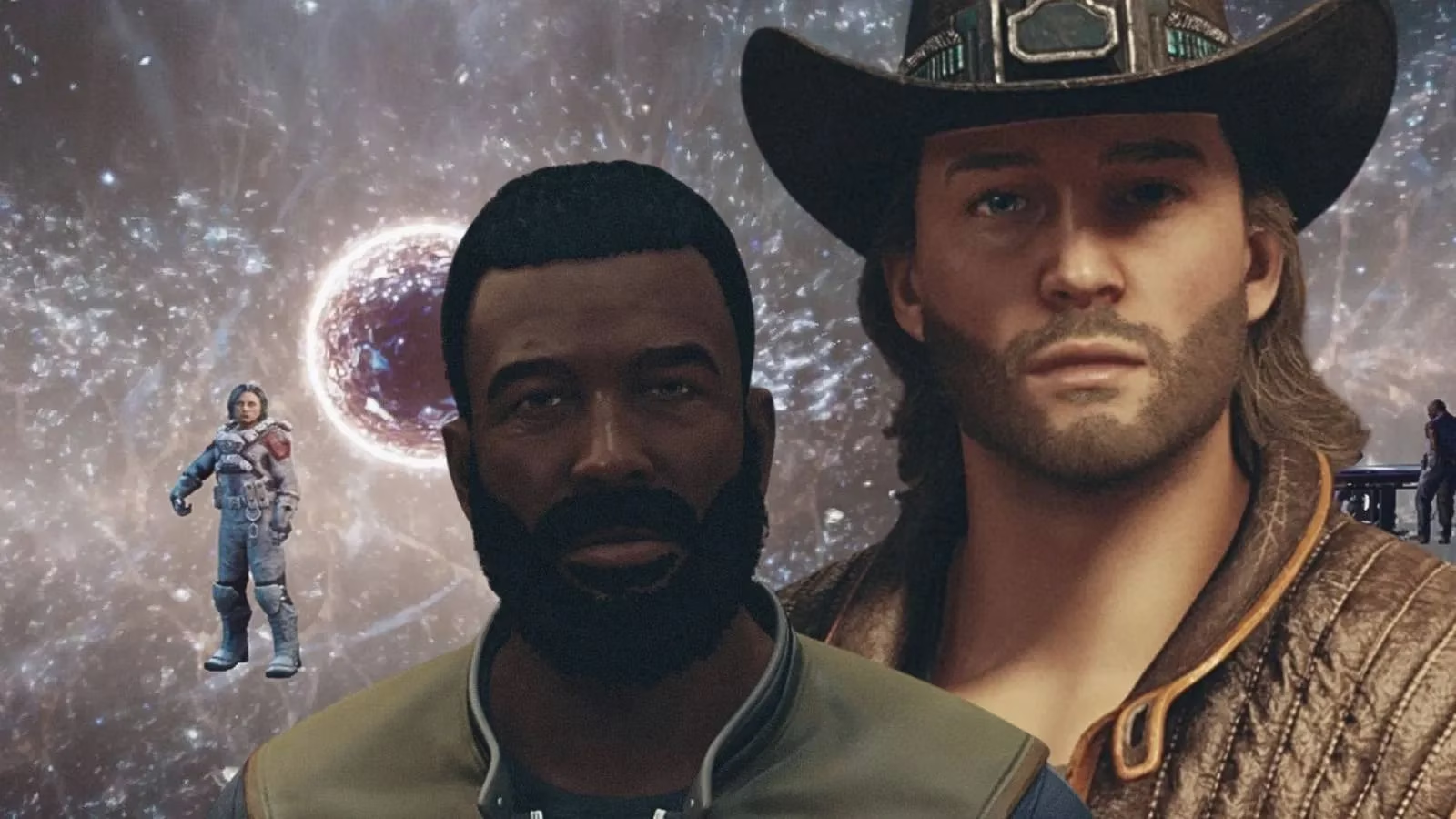
Let's be real for a second: Starfield walked into a room where everyone was expecting it to be the lovechild of Skyrim and No Man's Sky. 🚀 What players got was something… different. Instead of a completely seamless, boundary-less open universe, Bethesda delivered a more structured experience, with a heavier emphasis on action and looting. This mismatch between expectation and reality became the game's first major gravity well, pulling down initial reviews and player sentiment. It wasn't the unfettered freedom some had painted in their minds; it was a curated tour of the galaxy with designated stops.
-
The Narrative Gap: Many felt the main story lacked the depth and consequence they'd come to expect. Choices in quests sometimes felt like they were whispering when players wanted them to shout, leading to a sense that their actions didn't truly ripple across the Settled Systems.
-
The Procedural Planet Paradox: While boasting over 1,000 planets, the reliance on procedural generation led to a familiar critique—a mile wide but an inch deep. Discovering the tenth "abandoned mining outpost" that looked suspiciously like the first nine could make the universe feel smaller, not larger.
-
The New Game Plus Conundrum: The central NG+ mechanic, while an ambitious narrative idea, ended up feeling underwhelming for some, making repeat playthroughs feel more repetitive than revolutionary.
The DLC Dilemma: Shattered Space and Beyond
The release of the Shattered Space DLC in late 2024 was meant to be a course correction. Instead, for a significant portion of the community, it felt like receiving a missing piece of the original ship. Reviews were mixed, with a common sentiment being that the content should have been part of the base game from the start. The plot, while adding new lore, didn't feel substantial enough to quench the thirst for a richer narrative. It was a snack when players were hoping for a full-course meal.
This experience largely dissipated the hope that DLC alone could retrofit Starfield into everyone's dream game. However, Bethesda hasn't powered down the engines. Regular updates have continued to flow, adding quality-of-life features, supporting creators with better mod tools (allowing creations up to 2GB!), and even introducing new content like the "Watchtower" faction with fresh storylines and gear. The studio has hinted at future expansions, potentially focusing on the enigmatic Starborn, suggesting the story isn't over.
Finding the Signal in the Noise: Appreciation Through Mods and Lowered Orbits
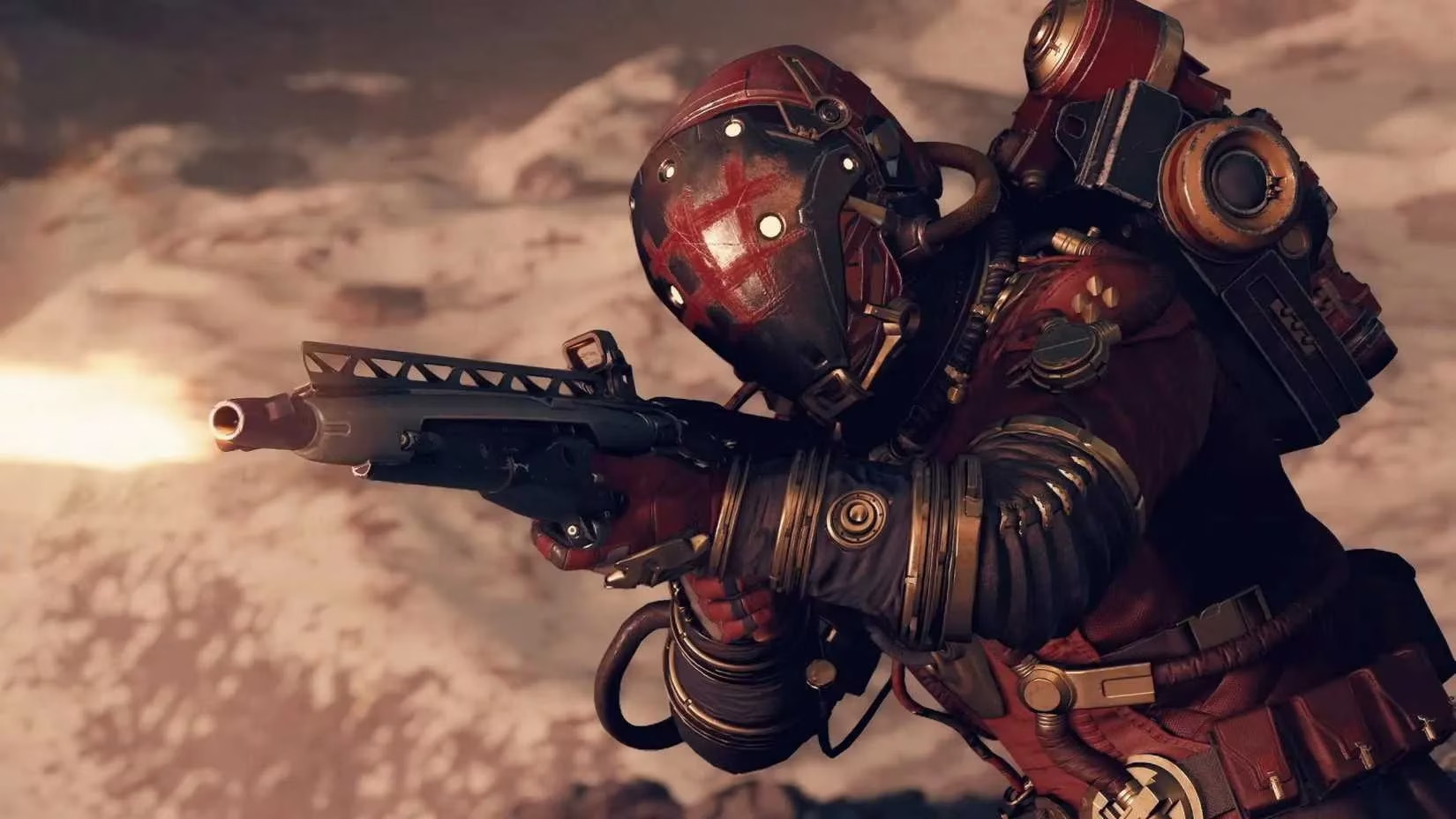
Here's the thing about Starfield in 2026: to truly enjoy it, you sometimes have to forget what you thought it was going to be and see what it actually is. When separated from the towering shadows of Fallout and The Elder Scrolls, it's easier to appreciate its own achievements—an expansive RPG with fascinating, if sometimes subtle, butterfly-effect scenarios across a hundred-hour journey.
For those bored with the base experience, the modding community has become the game's true star. 💫 Whether you're dreaming of:
-
Enhanced dialogue and deeper role-playing options.
-
Completely overhauled ship and outpost customization.
-
Whimsical or epic additions like full-blown Star Wars content conversions.
The modding toolkit has empowered players to build the game of their dreams. No single mod fixes everything, but together they allow you to tailor the galaxy to your exact preferences, which is a kind of freedom in itself.
Looking to the Horizon: Hope vs. Expectation
Bethesda's commitment seems clear: steady updates, more story DLC on the horizon, and whispers of a potential PS5 port. The path forward is about sustained support, not a single miracle patch. The most sensible approach for players now is to swap expectation for hope. Expecting Starfield to transform into something it was never designed to be only leads to disappointment. Hoping for continued interesting content and improvements allows you to enjoy what's already there—a solid, often beautiful, and ambitious space RPG with its own unique rhythm.
Sometimes, you just have to take things as they come. The game provides a vast playground for space-faring adventure, and there's still a unique joy in crafting your own story within it. The future of Starfield is still being written, both by Bethesda and by its pilots. The journey continues, one jump at a time.