Starfield's Long Road: How Shattered Space, Player Feedback, and Mods Shaped a Quieter Bethesda Era
By 2026, the orbit around Starfield looks different than it did when the game first launched. Its first year was a strange one: it never ignited the cultural fire that Skyrim and Fallout 4 did, but it was far from a failure. Tim Lamb, Starfield's lead creative producer, said the studio was proud of the release, even as fans examined Bethesda's design more critically than ever. He admitted the feedback was justified, adding that the team listens to the community while also acting as its own toughest critic. That tension became the raw material for Shattered Space, the game's first major expansion.
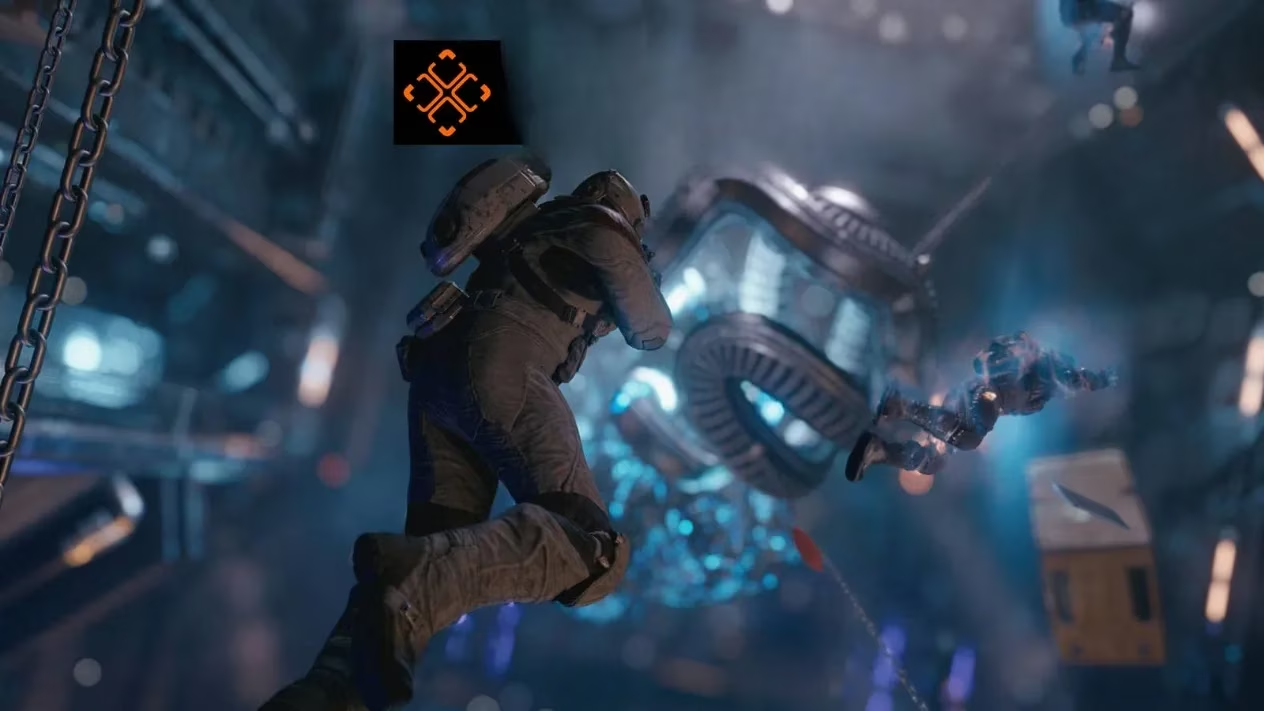
When Lamb spoke about the expansion, he didn't describe it as a simple map pack. He called it a pendulum shift. The base game gave players a giant galaxy filled with hopeful optimism, travel between worlds, and a constant sense of departure. Shattered Space flipped that rhythm into something slower: one secluded, focused, mysterious location. It was less like a galaxy-sized buffet and more like a candlelit dinner at a single table. That change excited the developers because spending so much time in one place creates an attachment the jet-setting base game could not always build.
A Pendulum Shift, Not a Reboot
The expansion launched on September 30, 2024, and Bethesda went all in on promoting it with a new trailer and a release date reveal. The pitch was deliberately different. Instead of asking players to bounce from planet to planet, Shattered Space kept everything inside one location. Lamb explained that during development there are always conversations that ebb and flow. The team looks for what gets them excited, what feels like a real shift. For Shattered Space, the answer was focus. The base game was about departure; the expansion was about staying put long enough to care.
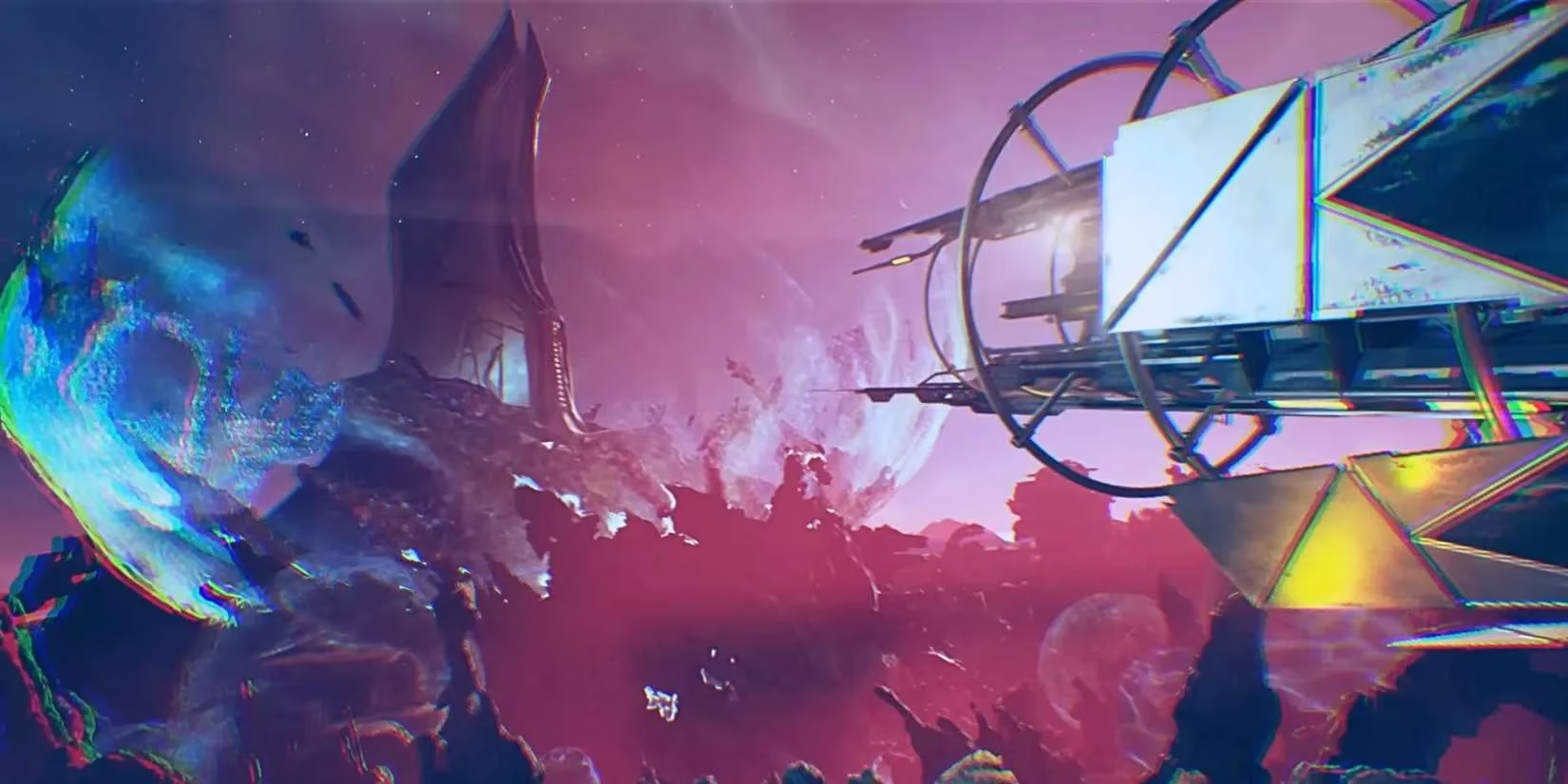
That change did not arrive alone. The REV-8 vehicle update came near the end of the same cycle, giving players a faster way to move across surfaces. It felt like a pair of sturdy hiking boots for a game that had spent months adjusting its backpack straps. The vehicle was a quality-of-life improvement wrapped in a bigger promise: Bethesda was not going to leave Starfield's rough edges alone.
A Quieter Update Rhythm
Lamb said the year after launch was spent trying to deliver quality-of-life updates every couple of weeks. Then came the REV-8 and Shattered Space as a big, end-of-year impact. That rhythm matters in 2026. Starfield has not become the next Skyrim overnight, but the studio's approach suggests a longer, less flashy plan. Regular patches, small system improvements, and occasional expansions create a different kind of momentum.
Bethesda wants to support its games for a long time. Lamb said there are always several ideas floating through development, and the team is always working on something. He didn't want to over-promise, but he made it clear that things are coming. For players who felt disappointed by the base game, that may sound like a cautious apology. For others, it sounds like a developer finally settling into a slow-burn relationship with its universe.
Hardcore RPG Urges Meet Approachable Systems
The success of Baldur's Gate 3 pushed more hardcore RPG mechanics back into the conversation, and Bethesda noticed. Lamb said there is always an internal debate about how deep the systems should go. The team loved the idea of more intricate RPG elements, especially when they fit the theme. But Bethesda still wants its games to be easily understood. Players can dive deep into Starfield's systems, but they are rarely forced to go deep in any one place.
That design philosophy is a balancing act. Starfield offers many tools, but it doesn't lock players into a single path. Lamb put it simply: the studio likes to give the player a lot of options. In Shattered Space, that philosophy translated into a narrower location with a thicker atmosphere, creating tension between accessibility and depth without fully abandoning either side.
| Design tension | Base game tendency | Shattered Space shift |
|---|---|---|
| Scope | Galaxy-wide, jet-setting | One secluded, focused location |
| Mood | Hopeful optimism | Mysterious, concentrated dread |
| Exploration | Rapid travel among worlds | Attachment to a single place |
| Player demand | Easy to understand | Room for deeper systems |
Mods as a Living Constellation
Shortly after the REV-8 update arrived, modders had already reshaped it. Lamb found that delightful. He said if people are having fun, even from a different angle than simply playing the game, there are more ways to interact with Bethesda titles than ever. His message to the modding community was simple: please keep doing it, because it makes him smile.

By July 2024, official mod tools made the game much easier to tinker with. The modding scene became a comet tail on Starfield's longevity: bright, fast, and made of thousands of small contributions. Lamb even admitted to trying a mod himself after seeing one posted online. It made him smile, which is exactly the kind of quiet win Bethesda needs.
The Long Game in 2026
Starfield may not have Skyrim's gravitational pull, but it has developed a quieter orbit. The base game's wide-open optimism now sits alongside a focused expansion, regular updates, official mod support, and a team that keeps listening. Whether that leads to another decade-long journey is still unknown. What the last few years show, however, is a studio willing to adjust its trajectory without pretending the criticism never happened. In 2026, that may be enough to keep the lights on in the settled systems.