Starfield's Next Chapter: Charting a Course Beyond the Unity
Bethesda's cosmic brainchild, Starfield, finds itself adrift in the great unknown of 2026. The developer has been awfully quiet about what's next for its sprawling space saga, and the fans? Well, they're left peering through the viewport, wondering if this ship is headed for the legacy drydock of an Elder Scrolls or if it's a one-and-done voyage. The game had its sights set on the stars, but capturing the hearts of players proved trickier than plotting a grav jump. If Bethesda wants to fire up the engines for a sequel, they've got a whole galaxy of challenges—and possibilities—to navigate. The ending, where you step into the Unity and become a Starborn, was a neat trick, sure, but it kinda painted the next story into a corner, didn't it?
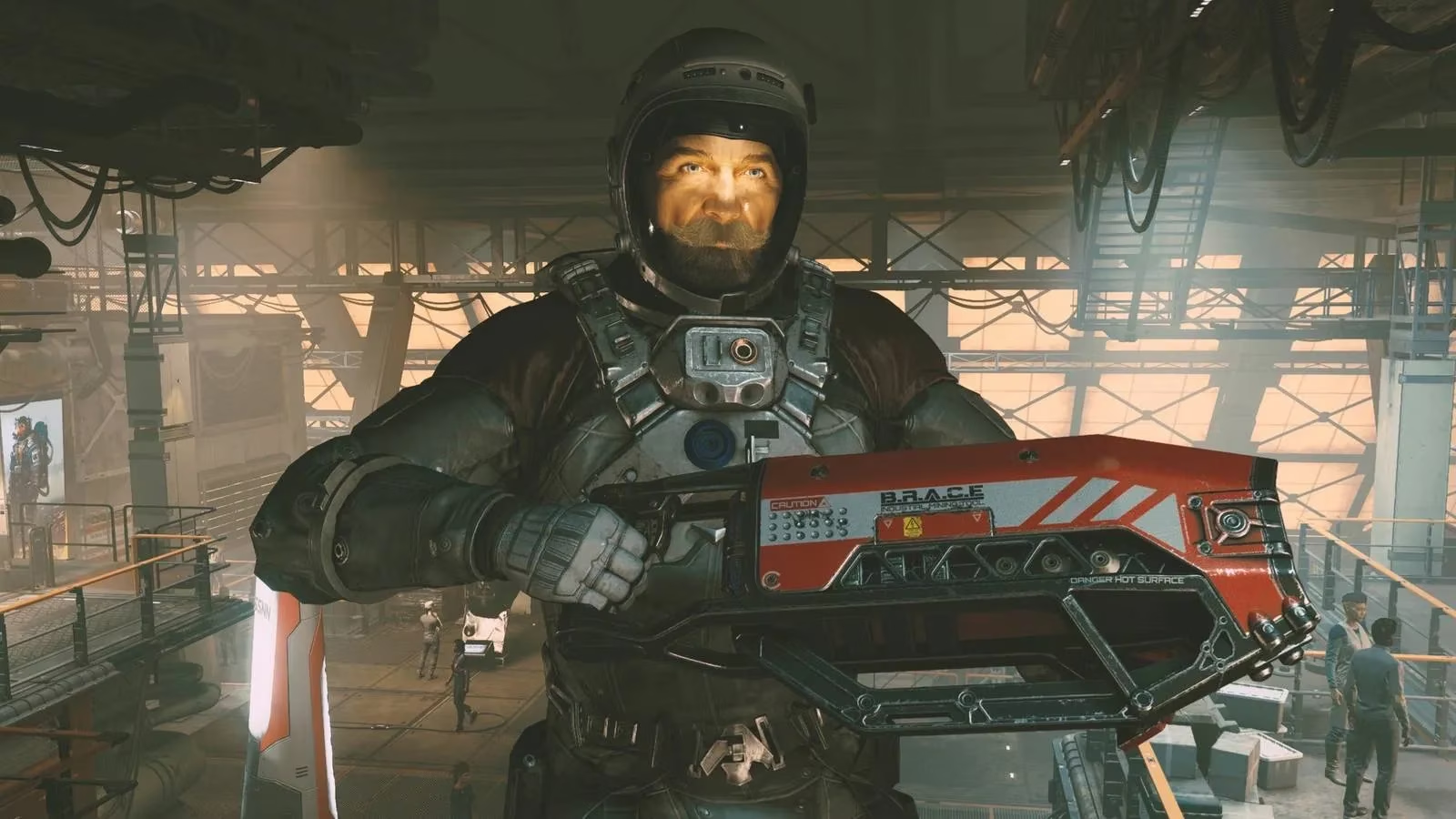
The Starborn Conundrum: A Beginning or an End?
No matter how you played your cards in the original game, the final destination was always the same: becoming a Starborn. That's the whole point of the Unity. Rumors have swirled about a "Starborn" expansion, but for a full-blown sequel, sticking solely with that ascended perspective might be... a bit on the nose. It's like knowing the punchline before the joke. Bethesda's got a choice: double down on the cosmic, god-like existence of the Starborn, or chart a course for entirely new horizons. The smarter play might be to let the sequel stretch its legs and explore the wider world, leaving the Starborn mystery as a backdrop, not the main stage. After all, a universe that big shouldn't revolve around just one idea.
Rewinding the Clock: Stories from the Past
To really spice things up, Bethesda might want to hit the history books—or the historical star charts. The game's present can feel a tad... quiet sometimes, folks say it lacks a pulse. The solution? A trip to the past! The United Colonies, that major faction everyone loves to deal with, has a rich and messy history just begging to be explored.
Two juicy prequel ideas are floating out there:
-
Founding Fathers (and Mothers) of the Stars: Imagine a game set during the gritty, early days of the United Colonies' formation. You wouldn't be a space explorer; you'd be a colony founder, a diplomat, or a pioneer laying the first foundations on a hostile world. The drama of building a government from stardust? Now that's a story.
-
The Narion War Chronicles: Now we're talking! The history logs mention the Narion War (2196-2216), a massive, two-decade slugfest between the United Colonies and the Freestar Collective. A game set here would solve the "lifeless" critique in one fell swoop.
| Prequel Setting | Potential Story Hook | Why It Could Work |
|---|---|---|
| Colony Founding Era | Political intrigue & survival on the frontier | Builds deep lore; explores moral choices of creation |
| The Narion War | Choose your side in a galactic conflict | Adds immediate stakes, action, and moral complexity |
Throwing players into a galactic war means dogfights, trench warfare on alien moons, and espionage. The best part? Even though we know how the war ended, the how and the personal costs are a complete mystery. Forcing players to choose a side—United Colonies' order or Freestar's independence—could lead to some truly gut-wrenching decisions. Talk about a recipe for drama!
The Final Frontier: Introducing... The Neighbors?
Alright, let's address the giant, tentacled elephant in the room. Bethesda went for a "grounded" sci-fi feel, which meant no chatty, intelligent aliens—just weird wildlife and ancient artifacts. It was a bold choice, but in 2026, maybe it's time to open the airlock. The lack of another major intelligent species might be holding the universe back from feeling truly vast and diverse.
Introducing a brand-new, alien-based faction could be the spark the IP needs. It doesn't have to be a cliché invasion.
-
The Challengers: An aggressive, advanced alien empire arrives, seeing the United Colonies as upstests trespassing in their galactic neighborhood. Instant galactic cold war (or hot war!).
-
The Newcomers: A peaceful, enigmatic species seeks to join or ally with the established factions, bringing incomprehensible technology and philosophies that disrupt the status quo.
Either way, first contact is one of sci-fi's oldest and most compelling tropes for a reason. It's a clear, exciting starting point that forces every human faction to react, redefine themselves, and ask what they're really fighting for. It would make the Settled Systems feel bigger, stranger, and much more alive.
Starfield's launch was a bumpy ride through an asteroid field, no doubt about it. But its universe is still out there, full of potential. A sequel isn't just a chance to continue a story—it's Bethesda's opportunity to learn, adapt, and finally deliver on the boundless promise of that starry-eyed premise. The galaxy is waiting. The question is, where will Bethesda point the ship next?
The silence from the studio is... telling. What are they building in the dark? Only time, and perhaps a future constellation of announcements, will tell.