Starfield's PlayStation Odyssey: Phil Spencer Drops Bombshell on Console Exclusivity
In a stunning reversal that has sent shockwaves through the gaming universe, the once-sacred walls of console exclusivity are crumbling before our very eyes. The year 2026 finds the industry in a state of perpetual flux, and at the epicenter of this tectonic shift sits none other than Starfield, Bethesda's sprawling cosmic RPG. For years, the narrative was clear: Starfield was the crown jewel of the Xbox ecosystem, a titanic exclusive designed to anchor the Game Pass fortress and lure players into the Microsoft fold. Yet, in a recent interview that felt more like a seismic event, Xbox chieftain Phil Spencer delivered a declaration that has fundamentally rewritten the rules of engagement. With an air of calm finality, Spencer stated that no game—not even the celestial behemoth Starfield—is safe from the multiplatform siren call. "There's no reason for me to put a ringfence around any game," he proclaimed, his words echoing like a death knell for the old guard of console wars. This isn't just a rumor anymore; it's a philosophical manifesto, signaling that Xbox's identity is undergoing a metamorphosis of cosmic proportions, where business success and player access trump the antiquated notion of hardware lockdown.
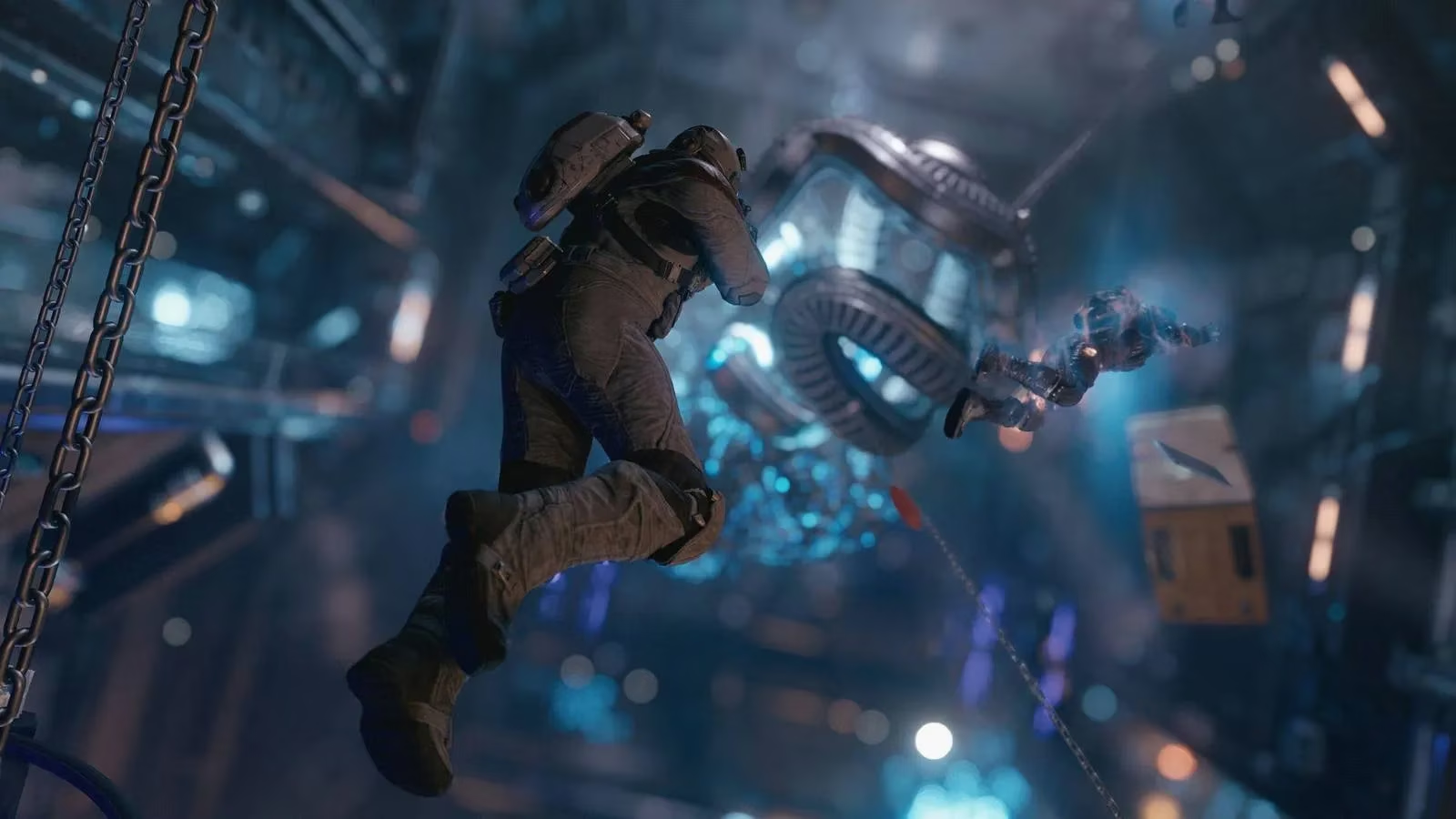
🌌 The Galactic Strategy Shift: From Exclusivity to Ubiquity
Phil Spencer's recent pronouncements are not mere corporate platitudes; they are the foundational pillars of a radical, new Xbox doctrine. The strategy is breathtakingly simple yet profoundly disruptive: let the games roam free. Spencer has unequivocally dismantled the concept of guaranteed Xbox console exclusives. In his vision, if a game can find a passionate audience and generate substantial revenue on another platform, the gates shall be opened. This paradigm shift places Game Pass not as a walled garden, but as a premier service within a larger, borderless gaming landscape. The focus has pivoted decisively from selling plastic boxes to selling subscriptions and experiences, wherever players may reside. This evolution, as Spencer argues, is not a betrayal but a natural progression—Xbox's identity has "always" been in a state of flux, adapting to the digital zeitgeist. The implication is colossal: the value proposition of an Xbox console is no longer solely its exclusive library, but rather its role as the optimal vessel for the Game Pass constellation.
🎮 Fan Sentiment: A Nebula of Anxiety and Hope
This strategic supernova has, predictably, ignited a superstorm of fan reactions. A significant segment of the Xbox faithful, those who invested in the ecosystem with the promise of unique, blockbuster exclusives like Starfield, are grappling with a potent cocktail of betrayal and uncertainty. Their concern is palpable: if the marquee titles are no longer anchored to the hardware, what defines the console's purpose? This existential quandary was directly posed to Spencer, who acknowledged the community's "less-than-optimistic" outlook. However, he frames this not as a dilution of brand value, but as an expansion of its reach and influence. For PlayStation 5 devotees, however, the news is nothing short of a miraculous celestial alignment. The prospect of embarking on Starfield's interstellar voyages without purchasing an additional console is a dream scenario, potentially bringing millions of new explorers into the fold. The fanbase is now polarized between those mourning the loss of an exclusive bastion and those celebrating the dawn of a more accessible gaming galaxy.
| Stakeholder Group | Primary Reaction | Underlying Concern/Excitement |
|---|---|---|
| Xbox Ecosystem Veterans | Betrayal & Uncertainty | "What is the point of my console if exclusives leave?" |
| PlayStation 5 Player Base | Elation & Anticipation | "Finally, access to coveted RPG experiences without new hardware." |
| Industry Analysts | Intrigue & Speculation | "Is this the end of traditional console exclusivity as a business model?" |
| Game Pass Subscribers | Validation & Satisfaction | "Our subscription model is being validated as the industry's future." |
💰 The Business Calculus: Why Starfield on PS5 Makes Galactic Sense
Beneath the surface-level drama lies a cold, hard calculus of commerce and player engagement. Starfield's 2023 launch, while successful, did not achieve the universe-shattering, platform-defining status many predicted. By releasing it on PlayStation 5 in 2026, Xbox and Bethesda parent company Microsoft unlock a lucrative revenue stream from a massive, established install base. This move transforms the game from a one-time system-seller into a perennial revenue-generating asset. It's a masterstroke in maximizing a substantial intellectual property investment. Furthermore, it serves as a monumental advertisement for the Xbox Game Studios brand and, by extension, the Game Pass service itself. PlayStation players who fall in love with Bethesda's design philosophy in Starfield may be more inclined to explore the studio's back catalog or future titles—potentially through Game Pass on PC or, should it ever arrive, on PlayStation itself. The strategy is a long-term play for mindshare and ecosystem growth over short-term hardware allegiance.
🔮 The Future Unfolds: A New Epoch for Xbox and Gaming
Phil Spencer's interview is less about Starfield and more about broadcasting Xbox's vision for the next decade. The message is unambiguous: the future is multiplatform, service-oriented, and player-centric.
-
The End of Exclusive 'Ringfencing': The era of holding games hostage to sell hardware is being phased out. Future tentpole releases from Bethesda, Activision Blizzard, and other Xbox Game Studios will be evaluated on a case-by-case basis for multiplatform potential.
-
Game Pass as the True North Star: The console becomes a premium vehicle for the service, not the other way around. Expect continued, aggressive expansion of Game Pass libraries and perks to reinforce its value as the central Xbox proposition.
-
Industry-Wide Ripple Effects: This move pressures competitors to re-evaluate their own exclusivity strategies. Could we see a future with more timed exclusives or premium content partnerships rather than permanent platform locks?
-
The Player Wins (Mostly): Ultimately, this philosophy leads to greater player choice and access. Gamers are less constrained by their hardware purchase and can follow the games they love.
The potential arrival of Starfield on PlayStation 5 is the first, massive tremor in this new landscape. It is a symbolic and practical declaration that Xbox is no longer just a console maker—it is a global gaming content and subscription powerhouse. The rings have been shattered, and the game is free to find its destiny among the stars and, most importantly, among all players. The final frontier of gaming isn't space; it's accessibility.