Starfield's PlayStation Port Debate: Why the Space RPG Isn't Ready to Land on Other Consoles
The gaming landscape in 2026 is one of shifting alliances and blurred lines. The once-fierce rivalry between Xbox and PlayStation has softened into a more cooperative, albeit still competitive, atmosphere. In this new era, the question of platform exclusivity has become a central topic, with Microsoft's flagship space RPG, Starfield, often at the heart of the conversation. Phil Spencer, head of Xbox, has notably avoided putting a "ring fence" around any game, leaving the door ajar for titles like Starfield to potentially journey to other shores. Yet, despite the compelling business logic and fan desire, a critical examination suggests that Starfield is not the ideal candidate to make this multi-platform leap. The game, even years after its initial launch, carries burdens that a simple port would not resolve and might, in fact, exacerbate.
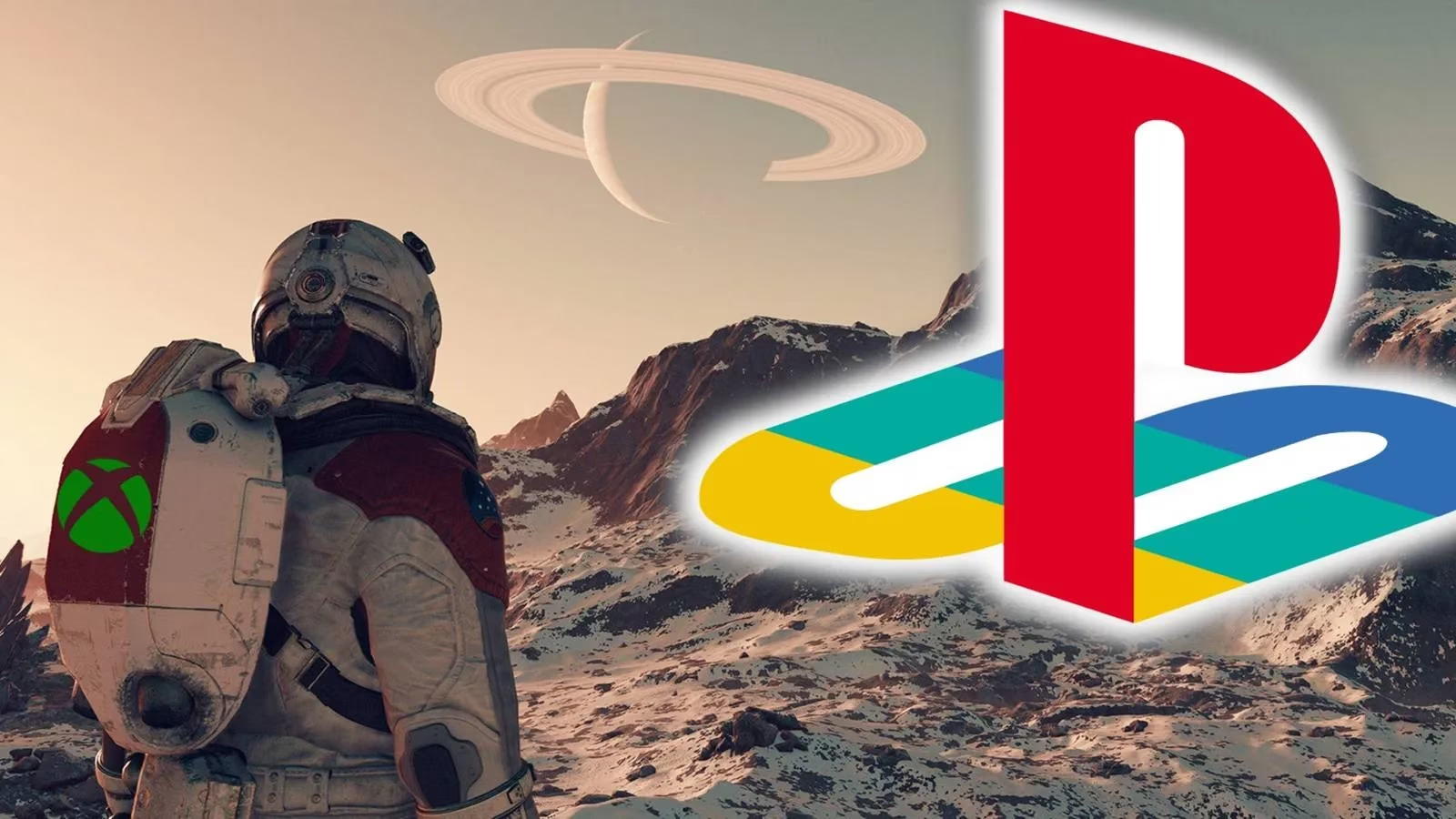
The Allure and the Risk of a Multi-Platform Future
The argument for a PlayStation port is straightforward and financially tempting. 😮💨 More players, more revenue. Opening Starfield to PlayStation's massive user base could significantly boost sales and player engagement. This move would align with Microsoft's broader, more open gaming strategy, where services and accessibility are becoming paramount. Game Pass's expansion to various devices—from PCs to Amazon Fire Sticks and upcoming handhelds—demonstrates this philosophy. The once-unthinkable idea of Game Pass itself reaching PlayStation hardware no longer feels like pure fantasy. A Starfield port could be a strategic piece in this puzzle, testing the waters for deeper collaboration.
However, this potential gain comes with substantial risks for the Starfield project and the Xbox brand:
-
Resource Diversion: Porting a massive, complex game like Starfield to a new architecture is not trivial. It demands significant developer time and resources. These are resources that could—and many argue should—be directed toward solving the game's core, lingering issues.
-
Brand Dilution: Starfield was conceived and marketed as a cornerstone Xbox exclusive. Its presence on PlayStation could weaken the perceived value of the Xbox ecosystem, reducing the incentive for players to invest in Microsoft's hardware. If every major game eventually appears everywhere, what defines a platform?
-
Development Complexity: Even if a separate team handles the port, Bethesda Game Studios would face the ongoing challenge of coordinating updates, patches, and content across multiple platforms. This can slow down the development cycle for everyone and complicate efforts to refine the unified player experience.
The Unfinished State of the Starfield Adventure
Beneath the surface of the porting debate lies the fundamental issue: Starfield, in 2026, still feels like a game in need of its own final polish before it worries about new homes. Critics and a vocal segment of the player base have pointed to persistent shortcomings that a new platform launch would not fix.
Core Gameplay & World-Building Issues:
| Area of Criticism | The Problem | The Needed Fix |
|---|---|---|
| Exploration & Planets | Feels like a checklist of repetitive tasks on barren, procedurally generated worlds. | Needs hand-crafted, memorable locations with unique environmental storytelling. 🌍 |
| Cities & Characters | Often described as generic and lacking the vibrant, lived-in feel of Skyrim's cities. | Requires more dynamic NPCs with deeper schedules, quests, and personalities. |
| Narrative Impact | Player choices frequently feel inconsequential to the broader world. | Decisions should have tangible, visible consequences that alter factions and storylines. |
| Companion System | Romance options and companion depth are limited compared to fan expectations. | Introduce companions with conflicting loyalties, complex personal quests, and more varied moral alignments. 👥 |
| Base Building | Feels like a shallow iteration of Fallout 4's system, disconnected from the core journey. | Integrate base-building meaningfully into exploration, story, and resource management. |
The game's structure has been criticized for feeling like a collection of disjointed systems rather than a cohesive, immersive adventure. Too often, the experience is interrupted by loading screens, breaking the sense of a seamless galaxy. For Starfield to truly shine, it needs to recapture the magic of Bethesda's past triumphs—the dense, interactive worlds of The Elder Scrolls and Fallout where every corner promised a story.
A Matter of Priorities and Precedent
Microsoft faces a strategic choice. Is the immediate revenue from a PlayStation port worth potentially stalling Starfield's evolution and diluting Xbox's identity? The wiser path may be to look at recent successful multi-platform releases for guidance.
Titles like Indiana Jones and the Great Circle, which launched to critical acclaim, are far stronger candidates for cross-platform expansion. Porting a well-received, polished game reinforces a brand's reputation for quality. Porting a game that is still publicly grappling with its fundamental design invites the same criticisms to a new, potentially less forgiving audience. It could be seen as an attempt to monetize an unresolved problem rather than celebrate a finished masterpiece.
Furthermore, Microsoft's commitment to Starfield's long-term health is on display with continued updates and expansions. Splitting focus now could jeopardize the delivery of transformative improvements that the dedicated player base is waiting for. The development team's priority should be crafting the definitive version of Starfield for its home platform, addressing the litany of desired fixes—from more engaging quest design to a more dynamic universe.
Conclusion: A Journey Needing Completion
In the end, the conversation about Starfield on PlayStation is a distraction from the more pressing mission. The starship is still being built in the hangar; debating which other spaceports it could visit is premature. 🚀 Phil Spencer's open-ended comments reflect a new industry reality, but they should not be misinterpreted as a mandate for every game to go multi-platform immediately.
For Starfield to earn a successful landing on PlayStation or any other platform, it must first fulfill its own promise on Xbox. It needs Bethesda's undivided attention and Microsoft's full support to evolve into the cohesive, captivating RPG it was meant to be. Only when its cities bustle with life, its planets tell compelling stories, and its gameplay loops feel genuinely adventurous will it be truly ready for a wider audience. Until then, the greatest service to Starfield and its players is not a port, but a relentless focus on perfecting the voyage it already offers.