Starfield's Ryujin Faction: Navigating the Branching Paths of the 'Managing Assets' Quest
As I dove deeper into the sprawling corporate espionage of Ryujin Industries in Starfield, the 'Managing Assets' quest presented itself as a fascinating microcosm of the game's reactive narrative design. What initially appears as a simple errand for Neon City's administrator, Benjamin Bayu, quickly unravels into a mission where past decisions come back to haunt—or help—you. Masako's directive to eliminate a rival operative isn't just another task; it's a direct consequence of my actions during the earlier 'Guilty Parties' mission, where I operated without Bayu's blessing. This mission, though brief, perfectly encapsulates how Starfield weaves player agency into the fabric of its faction storylines, proving that no choice is ever truly forgotten in the Settled Systems.
The quest's initiation is straightforward but carries significant narrative weight. Upon reporting the completion of 'The Key Ingredient' to the Ryujin board, Masako summons you to her office. The briefing is tense. She explains that to smooth over the diplomatic friction caused by your previous unauthorized infiltration, Ryujin must now do a favor for the powerful and volatile Benjamin Bayu. The favor? Eliminating a business rival's operative. The simplicity of the objective belies the complexity that awaits, a complexity rooted entirely in a choice I made hours earlier, during the very first Ryujin mission, 'Back to the Grind.'
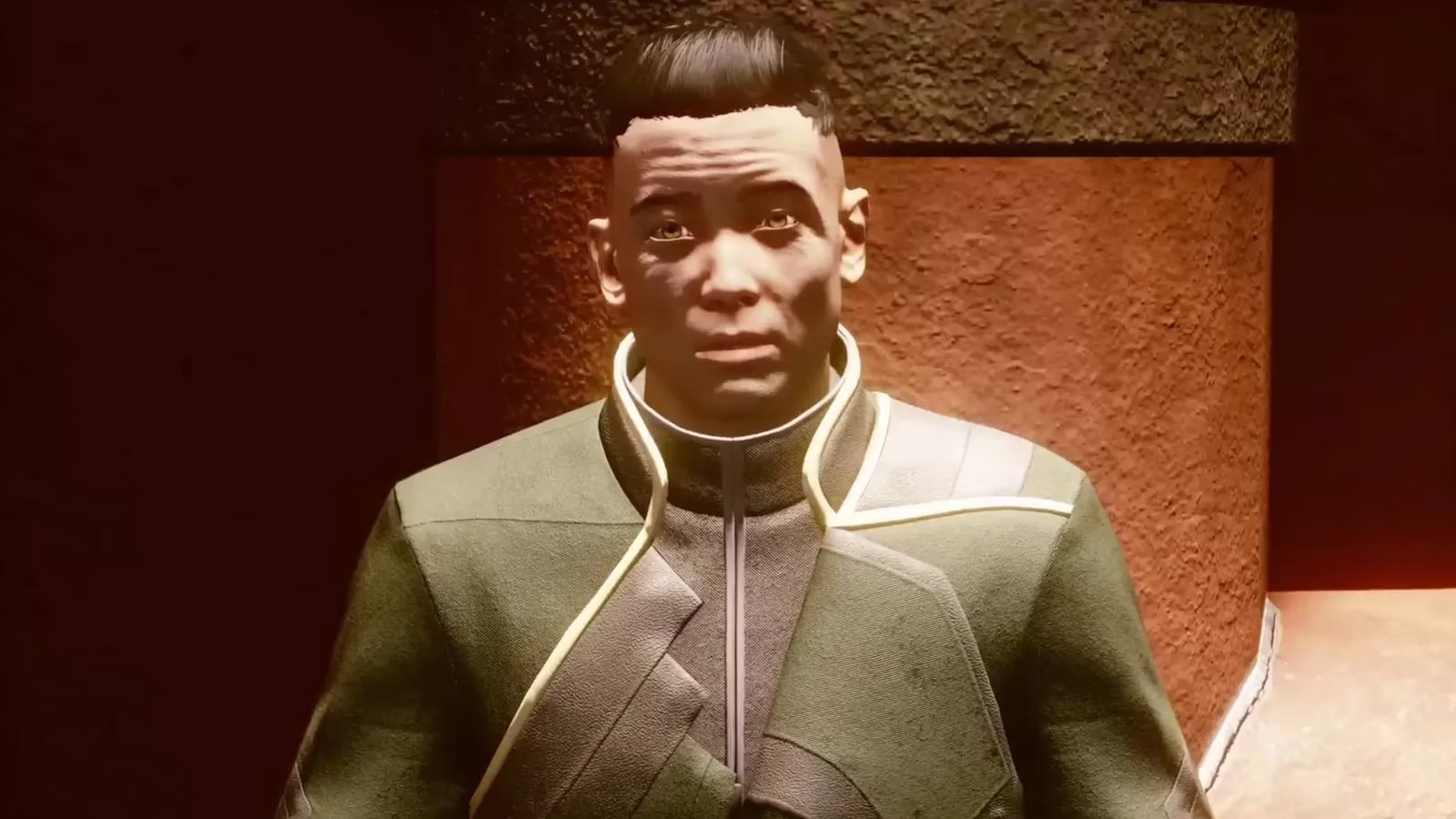
This is where Starfield's branching narrative shines. The identity and location of the target operative are not fixed. They are dynamically determined by my prior interaction with a character named Tomo Higashi. The game remembers, and it adapts. The mission log may point you toward an objective, but who that objective is depends entirely on your past.
| My Choice in 'Back to the Grind' | Consequence in 'Managing Assets' |
|---|---|
| I spared Tomo Higashi | Tomo himself becomes the target, located right here in the neon-drenched corridors of Neon. |
| I eliminated Tomo Higashi | The target is a random, unnamed operative, forcing me to travel to a different planet to complete the hit. |
This system creates a powerful sense of continuity. If Tomo is alive, the confrontation carries personal weight—it's a direct payoff to a previous moral decision. If he's gone, the mission becomes a more impersonal, corporate-sanctioned assassination on a foreign world. Both paths are valid, but they offer distinctly different tones and logistical challenges.
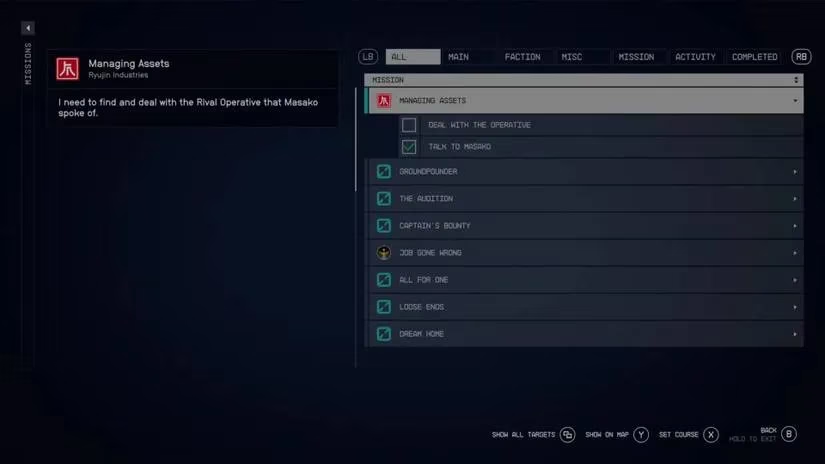
Upon reaching the target—whether it's a familiar face in a Neon alley or a stranger on a dusty moon—the game opens up yet another layer of choice. Starfield rarely forces a single solution. In the case of 'Managing Assets,' I found I had three primary avenues to resolve the situation, each aligning with different playstyles and moral compasses.
The most direct, and perhaps violent, method is to simply attack and eliminate the operative. This fulfills Bayu's request to the letter and is the expected outcome for a corporate enforcer. However, for players invested in a more nuanced or non-lethal approach, alternatives exist. You can confront the operative and demand they disappear, faking their death. This requires you to later lie to your Ryujin handler, Dalton, about completing the job. Alternatively, you can engage in a bit of corruption: accept a bribe from the target (typically around 5,000 Credits) to let them go, again returning to Dalton with a fabricated story of success.
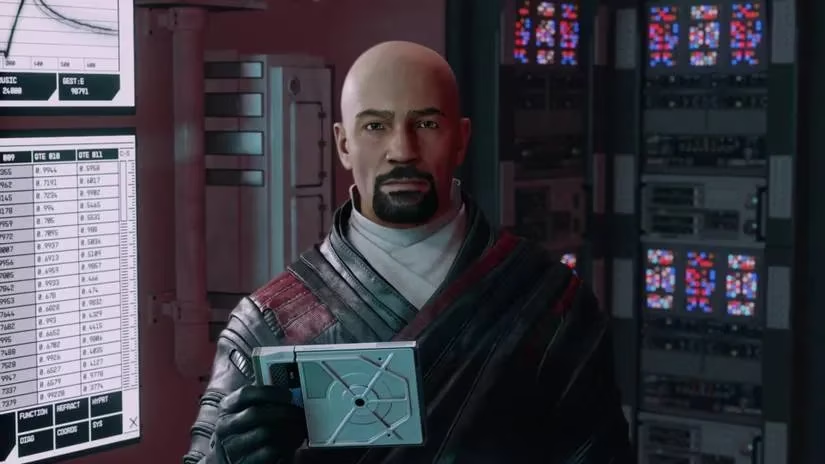
The final act of the quest is a return to Ryujin Tower on Neon to report to Dalton. This debriefing is a quiet moment of role-playing where you solidify the story of your mission. Regardless of the path chosen, successfully reporting back nets you a standard Ryujin reward package:
-
1,000 Credits for your troubles.
-
110 Experience Points to aid your progression.
-
1 Reconstim, a useful aid for healing.
While the tangible rewards are consistent, the real prize is the narrative satisfaction. 'Managing Assets' is a masterclass in efficient, player-driven storytelling. In the span of one short mission, it:
-
References past decisions (Tomo's fate).
-
Advances faction politics (Ryujin's relationship with Bayu).
-
Offers meaningful present choices (kill, deceive, or extort).
-
Sets the stage for future consequences (how will your lie or brutality affect later Ryujin operations?).
As of 2026, reflecting on Starfield's legacy, quests like 'Managing Assets' stand out as foundational examples of its design philosophy. It demonstrates that narrative depth isn't solely about length or spectacle, but about creating a web of cause and effect that makes the player feel like an authentic agent within the game's world. For any player navigating the cutthroat world of Ryujin Industries, this mission is a pivotal reminder: in the corporate sprawl of the future, every asset you manage—and every life you touch—has a cost and a consequence.