Starfield: Shattered Space's Event Horizon Homage Still Feels PG-Rated in 2026
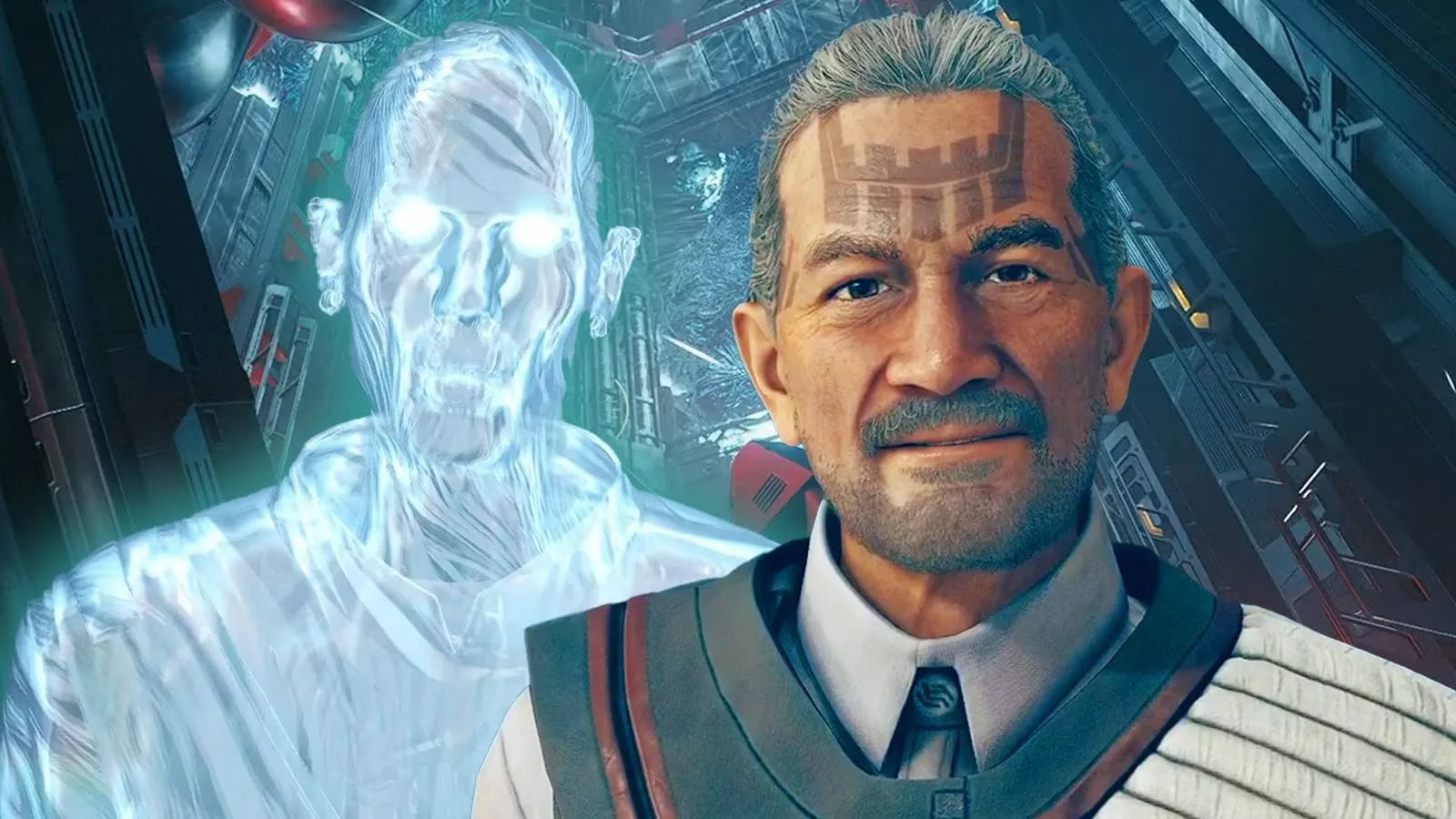
In late 2024, Bethesda released Starfield: Shattered Space, an expansion that promised a darker, more unsettling chapter in the Va'ruun storyline. The early teasers suggested a genuine descent into cosmic horror, but two years later, the conversation has solidified: while the DLC's opening mission, "What Remains," is a clear and loving nod to Paul W.S. Anderson's 1997 cult classic Event Horizon, it consistently pulls its punches. The gravity-drive catastrophe aboard the Oracle Starstation mirrors the doomed vessel's journey almost beat for beat, yet the final product abandons the visceral, flesh-rending body horror that gave the film its lasting power. For fans who keep returning to Event Horizon for its gore, dread, and Sam Neill's eyeless mania, Shattered Space remains a sanitized echo — a PG version of a nightmare.
Event Horizon was not a box office darling upon release, but it earned a passionate cult following precisely because it dared to be repulsive. Set in 2047, the rescue crew of the Lewis and Clark discover the Event Horizon, a ship that disappeared after testing an experimental gravity drive. Instead of simply gone, the vessel had torn a hole into a hellish dimension, and the returned ship was now a living, meat-strewn charnel house. Crew members became grotesque parodies of humanity, self-mutilating and splicing together in scenes that made viewers' skin crawl. It was a sci-fi horror hybrid unafraid to show the wet, screaming consequences of bending spacetime.
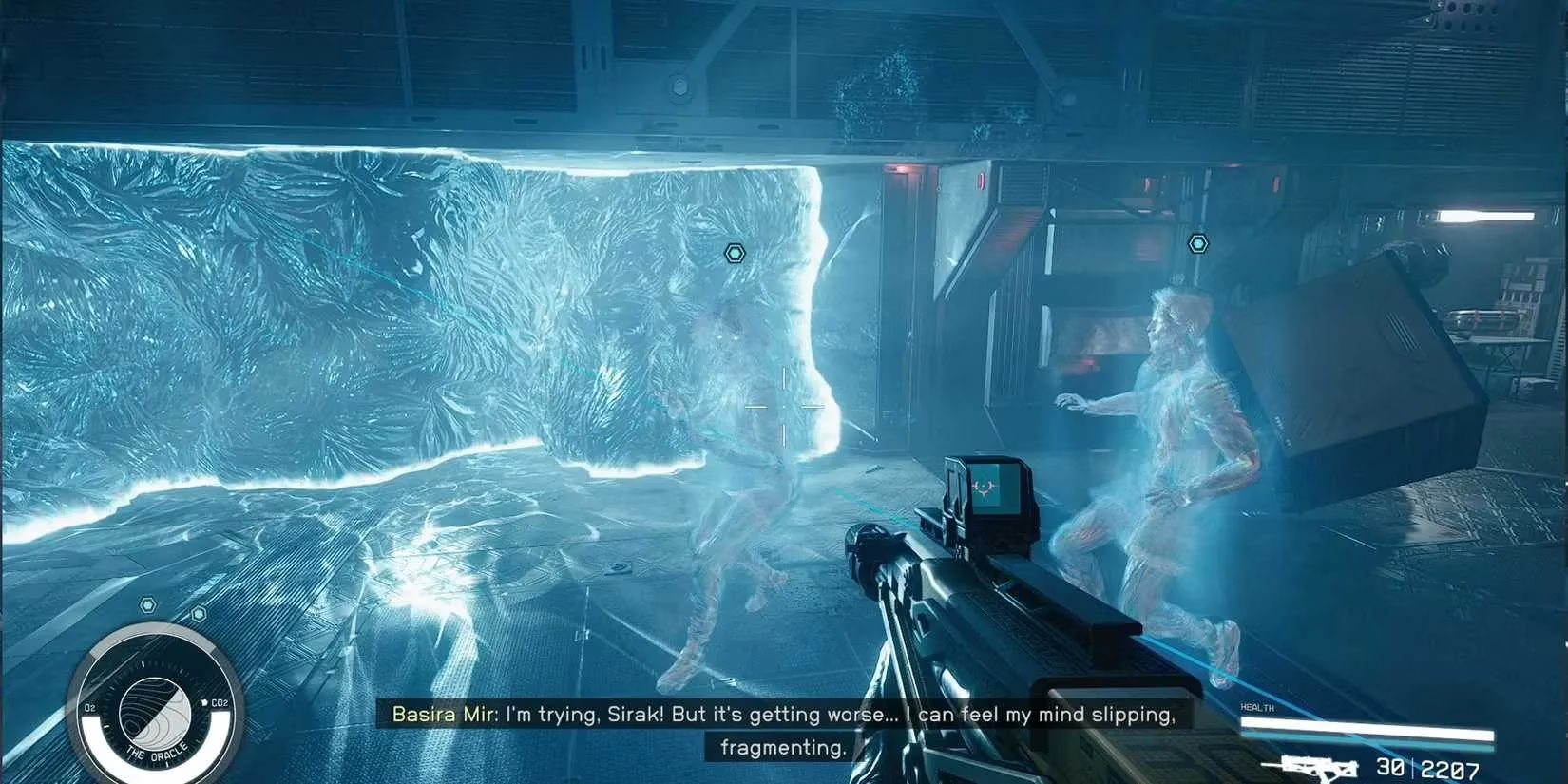
Starfield: Shattered Space begins with striking similarities. Responding to a distress call, the player boards the Oracle and immediately encounters Sirak Veth'all and Basira Mir, two Va'ruun citizens whose minds are fracturing. The reason? An energy surge from the station's grav drive has warped perception, opening rifts that allow Vortex Phantoms — glowing, translucent entities — to invade. Audio logs and frantic dialogue reveal a crew corrupted by the very technology meant to transport them. The narrative structure is practically identical to Event Horizon: experimental gravity technology goes wrong, folds space-time, and lets something alien and malevolent through.
Yet the execution is where homage transforms into missed opportunity. The horror elements in Shattered Space are atmospheric at best: flickering lights, spectral apparitions, and psychological disorientation hint at dread but never deliver a true scare. The Vortex Phantoms, rather than being horrifying amalgamations of flesh and metal, look like ethereal copies of Dr. Manhattan with borrowed Starborn death animations. They evaporate neatly when shot, leaving no trace of the body horror that made Event Horizon so unforgettable.
A side-by-side comparison of the two narratives highlights both the reverence and the dilution:
| Element | Event Horizon (1997) | Starfield: Shattered Space (2024) |
|---|---|---|
| Catalyst | Gravity drive opens a gateway to a hell dimension | Grav drive malfunction tears holes to another reality |
| Antagonists | Mutilated crew members, demonic entities, and a possessed Sam Neill | Glowing Vortex Phantoms and mind-bent Va'ruun citizens |
| Crew Transformation | Self-inflicted gore, missing eyes, flesh merging with ship walls | Psychological decay, agitation, and eventual violence |
| Tone | Relentless dread, gore, and religious terror | Creepy ambiance with sci-fi mysticism |
| Visual Style | Fleshy sinew, blood, rusty metal, hellfire aesthetic | Shiny blue energy, clean station interiors, phantoms |
The table lays bare why the DLC feels trapped in a safer rating. There is no equivalent to Sam Neill's iconic transformation — a paleontologist-turned-hellspawn with sewn-shut eyes and a face stripped of humanity. Shattered Space offers no moment where a character's body becomes the canvas for otherworldly corruption. Basira Mir attacks the player, but the encounter resolves without any bodily distortion beyond a glazed expression. The expansion gestures toward horror but mainly retreats into the "science" part of sci-fi, burying terror under exposition about grav drive theory and multiverse physics.
This sanitization might be a deliberate design choice from Bethesda, but it also reflects a broader challenge in translating filmic body horror into an interactive medium where player agency and ratings boards demand boundaries. However, other games have proved that grotesque, unflinching horror can thrive. Titles like Dead Space (remade in 2023) and Scorn delivered monsters born of mangled organic matter, making every corridor a gallery of revulsion. Shattered Space had the lore permissions to go there — the base game's Terrormorphs already hinted at biological horror — but instead opted for ethereal glowing threats that fade like never-ending sidequests.
On social media and forums in 2026, the conversation occasionally resurfaces when new players discover the Event Horizon connection. Many first-time Starfield explorers admit they missed the reference entirely — a testament to how thoroughly the DLC sanded away its inspiration's teeth. A horror homage that doesn't register as horror risks becoming just another questline with purple loot. That said, some fans appreciate the respectful nod, even if it is in a milder form. It has driven a modest resurgence of interest in the 1997 film, with streaming numbers showing a slight bump whenever a major Starfield update drops.
Still, the lasting impression is one of longing. Experiencing "What Remains" is like walking through a haunted house where all the scare actors are on break — the architecture is correct, the lighting is dim, but the actual fear is just out of reach. Shattered Space proves that Bethesda can map a brilliant plot onto its universe, but it also demonstrates that stripping that plot of the sweat, blood, and viscera that made it iconic leaves something that feels more like a respectful school project than a cult classic in the making. In the years since its release, the DLC has become a fascinating study in the gap between inspiration and execution, a reminder that horror isn't just about what you see — it's about what crawls inside you and refuses to leave.