The Deliberate Calm of Starfield: Why Bethesda Chose Restraint Over Gore in Its Cosmic Odyssey
As I drift through the silent majesty of space, my gaze fixed upon the infinite tapestry of stars, I reflect on the deliberate quietude of my journey. The universe of Starfield, for all its vastness and potential for conflict, feels different from the worlds I've traversed before. There are no crimson geysers erupting from fallen foes, no heads tumbling in morbid spectacle, no bodies disintegrating into visceral puddles. The violence here is a contained, almost surgical thing—a sharp report from my rifle, a spark against armor, a silent slump to the alien soil. This was not an omission, I've come to learn, but a conscious, philosophical choice, a whisper of restraint in a genre often defined by its shouts.
In the echoing halls of memory, the words of those who shaped this universe resonate. Former Bethesda senior artist Dennis Mejilones once spoke of the intricate systems that were built, tested, and ultimately set aside. They had crafted the digital scaffolding for decapitations, for the gruesome ballet of dismemberment that players of Fallout know so well. The technical challenges were a labyrinth unto themselves—a "big rat's nest," as he called it. How does one cleanly sever a helmet woven with a nest of futuristic hoses? How does the digital flesh cap the stump of a neck when a player can sculpt their character's body from a spectrum of sizes? The character creator had evolved into a thing of beautiful complexity, and with that freedom came a cascade of complications for every violent interaction. The cost was not just in processing power, but in artistic focus.
Yet, the true heart of the decision lay beyond mere code. It was a question of soul. The team looked to different stars for guidance. Their inspirations were not the anarchic, darkly comic wastelands, but the more grounded, contemplative realism of The Expanse and the hopeful, exploratory spirit of Star Trek. In those narratives, violence is a weighty, consequential act, not a cartoonish release. Fallout's over-the-top gore—the perk that turns raiders into exploding goo, the exaggerated arterial sprays—is part of its essential, tongue-in-cheek DNA. It's the Fist of the North Star of video games, where the spectacle of violence is the style. For Starfield, that style felt dissonant. It simply didn't fit the thematic tapestry they were weaving—a tapestry of discovery, of humanity's tentative steps into the cosmos, where wonder and danger coexist in a more measured balance.
The absence speaks volumes. It creates a distinct tonal palette:
-
A Sense of Real Consequence: Every firefight feels less like a carnival of destruction and more like a deadly, serious exchange. The stakes are measured in oxygen levels and hull integrity, not in gallons of virtual blood.
-
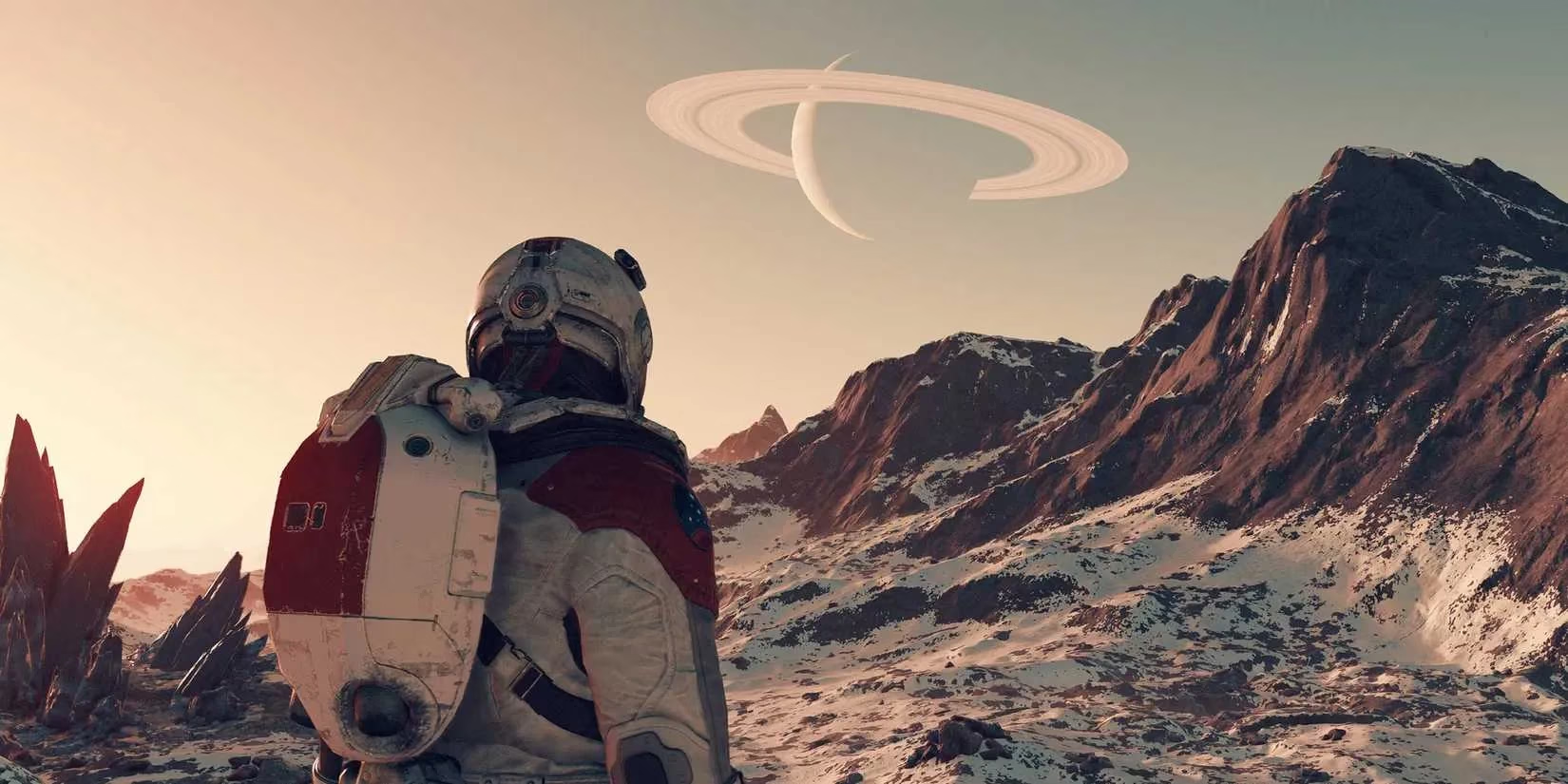
Focus on the Environment: The grandeur of the planets themselves—their alien sunsets, their strange rock formations—remains the central spectacle, uninterrupted by gratuitous viscera.
-
Narrative Cohesion: The "low-key and realistic" approach aligns the gameplay with the story's more serious, exploratory ambitions.
This design philosophy extends beyond combat. It's a holistic approach to world-building. When I stand on a barren moon, the silence is profound, broken only by the sound of my own breath in my helmet. The challenge is survival, the awe is in the vista, not in the mutilation of my enemies. This restraint is, in its own way, a bold creative statement in an industry where excess is often the default.
It is a choice that invites the player to engage differently. We are not demigods of dismemberment here, but explorers. Our tools are for scanning, for building, for navigating diplomatic tensions as often as they are for fighting. The violence, when it comes, is a punctuation mark in a much longer sentence of exploration, not the sentence itself. This deliberate calibration shapes the entire experience, making the vast, quiet moments between conflicts feel more significant, more real.
As I prepare my ship for another jump into the unknown, I understand this universe a little better. Its calm is not a lack of passion, but a different kind of intensity. It is the intensity of the void, of distance, of fragile human life against an uncaring cosmos. The blood that isn't spilled on its planets leaves more room for the stories that are written in the starlight, in the outposts we build, and in the quiet, personal odyssey of simply being a small thing adrift in an impossibly large sea of stars. The violence they removed was not just a technical feature; it was a thematic boundary they chose not to cross, and in doing so, they defined the unique, contemplative soul of this celestial journey.