The Elder Scrolls 6's Settlement Crossroads: Learning from Fallout 4 and Starfield
As the gaming community looks toward 2026 and beyond, the anticipated release of The Elder Scrolls 6 brings with it a pivotal design question: what form will its settlement mechanics take? Bethesda Game Studios has spent the last decade refining player-driven construction systems, with Fallout 4's settlements and Starfield's outposts representing two distinct philosophies. The studio now stands at a creative fork in the road, where the chosen path will significantly shape the identity of its next fantasy epic. The decision isn't merely about building mechanics; it's about determining the core relationship between player agency and the handcrafted narrative world of Tamriel.
The Legacy of Building: From Hearthfire to the Stars
The journey to this crossroads began with The Elder Scrolls V: Skyrim's Hearthfire expansion. This system was a proof of concept—a basic but satisfying loop of purchasing land, gathering resources like stone and clay, and constructing a customizable home from the ground up. It introduced services like hiring a steward or a bard, planting the seed for a deeper connection between player-built spaces and the game world. This foundation was then dramatically expanded in Fallout 4.
Fallout 4 transformed the simple homestead into a full-scale settlement system. Here, the Sole Survivor could rebuild the Commonwealth, not with a single house, but with entire towns. However, this system operated within specific, predetermined locations. This constraint became its greatest narrative strength. Each settlement, from the iconic Red Rocket Truck Stop to the sprawling Starlight Drive-In, had a unique personality and context woven into the world.
| Feature | Fallout 4 Settlements | Starfield Outposts |
|---|---|---|
| Location Freedom | Fixed, predetermined sites | Any viable planet location |
| World Integration | High - Unique context & NPCs | Low - Isolated & repetitive |
| Primary Goal | Rebuilding society & storytelling | Resource extraction & player expression |
| Player Expression | Themed within location constraints | Nearly unlimited visual freedom |
Starfield then took the concept to its logical extreme with the outpost system. Here, the shackles of predetermined locations were removed. Players could place an Outpost Beacon on almost any patch of viable terrain across a thousand planets, claiming it as their own. The goal shifted from community-building to personal expression and industrial resource networks. The outpost became a player's private canvas, but one that often felt as isolated and impersonal as a research station on a distant moon.
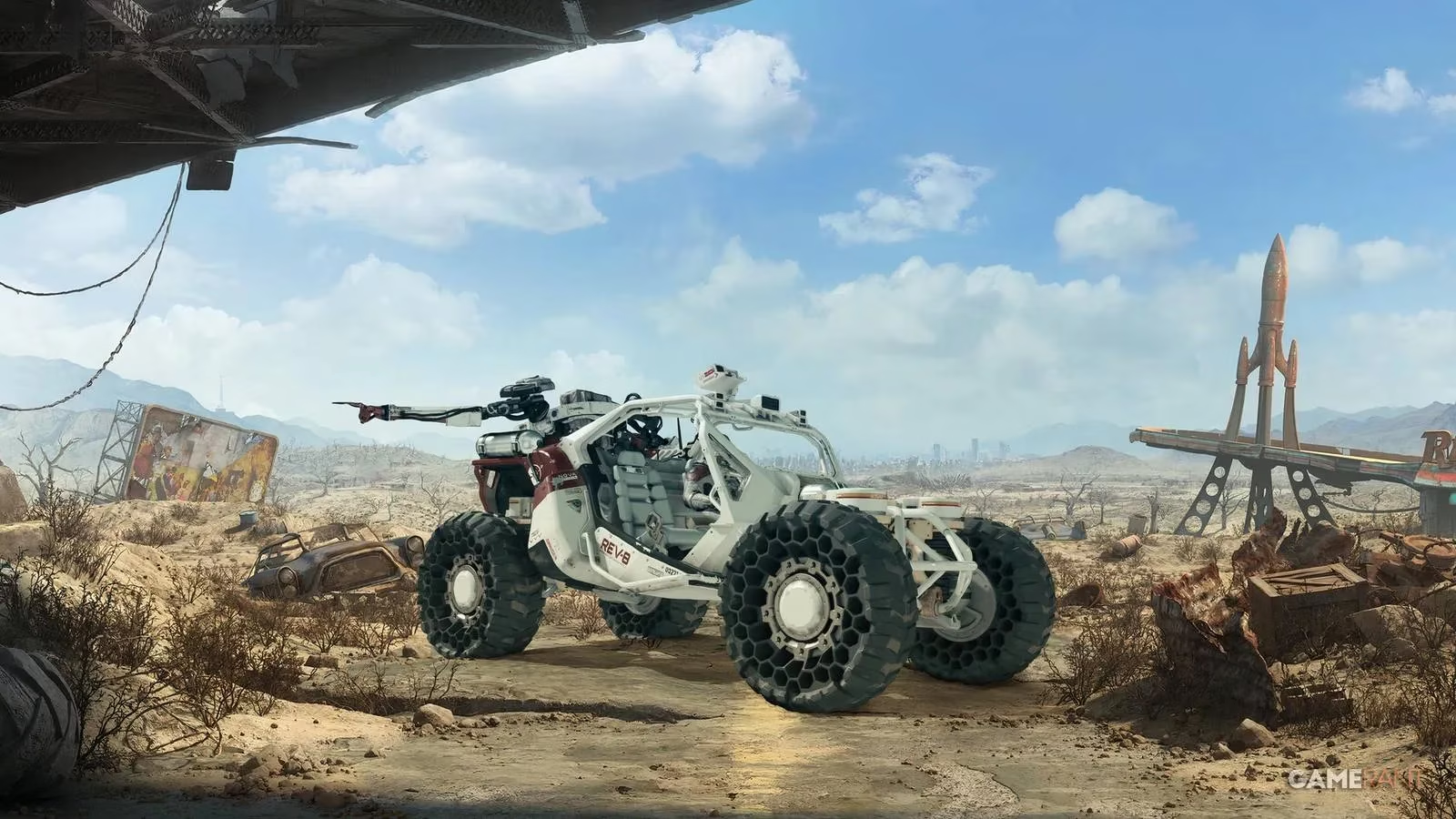
The Fork in the Road: Narrative Control vs. Creative Freedom
For The Elder Scrolls 6, these two models present a classic game design dilemma. Choosing a path is like deciding between curating a museum exhibit where every piece has a documented history or providing an empty warehouse and a limitless supply of clay.
The Fallout 4 Path (Curated Settlements):
This approach favors narrative depth and world cohesion. By integrating buildable locations into the handcrafted world, Bethesda can:
-
Populate them with unique NPCs who have their own stories and quests. 👥
-
Design visually distinct and memorable locations that feel like a natural part of Tamriel's geography.
-
Weave settlement development into the main narrative or faction storylines, making the player's construction feel consequential.
The drawback? It inherently limits player freedom. Builders cannot simply plop a castle on a mountain peak if that peak isn't one of the designated spots. The system can feel restrictive to players who view the world as their ultimate sandbox.
The Starfield Path (Freeform Outposts):
This approach champions unbridled player expression and exploration. It would allow players to:
-
Establish a personal stronghold on any breathtaking cliffside, forest glade, or desert oasis they discover.
-
Enjoy complete creative control over the layout and architecture without pre-existing location themes.
-
Experience the joy of truly "finding" and claiming their own special corner of the world.
The risk here is creating experiences as disconnected from the world as a message in a bottle floating in an ocean of content. Without bespoke NPCs, quests, or environmental context, these player homes can become beautiful but lonely dioramas, lacking the vibrant life that defines The Elder Scrolls worlds.
Envisioning a Hybrid Future for TES6
The most compelling solution for 2026 might not be a choice between the two roads, but the construction of a new path that merges their strengths. Imagine a system with layered building permissions:
-
Provincial Estates (Curated): Key, narratively-rich locations in each region—a ruined fort on a strategic pass, a derelict manor house in a haunted forest—could be reclaimed and rebuilt. These would function like Fallout 4 settlements, coming with unique characters, quests, and regional significance. They would be the anchors of the player's legacy in the world.
-
Wilderness Encampments (Freeform): Beyond these curated spots, the wilds of Tamriel could be open for small-scale, Starfield-style outpost building. These would be simpler camps, hunter's lodges, or remote shrines—places for resource gathering, survival, or role-playing a hermitic life. They would offer freedom without demanding the complex NPC ecosystems of a full settlement.
This hybrid model could satisfy both the storyteller and the sculptor. It would allow Bethesda to deliver the deep, world-changing narratives that Fallout 4's settlements promised, while also granting the "live anywhere" fantasy that Starfield offered. The player's journey could begin with a modest personal camp hidden in the woods and culminate in the restoration of a grand, storied castle that becomes a hub of faction politics. After all, building a home in a world as rich as Tamriel shouldn't just be an act of construction; it should feel like weaving a new thread into an ancient and living tapestry.
Recent analysis comes from VentureBeat GamesBeat, whose reporting on game production trends helps frame why Bethesda may favor a hybrid approach for The Elder Scrolls 6: curated, quest-integrated estates that strengthen narrative cohesion alongside lighter, freeform wilderness camps that preserve exploration-driven player expression without demanding fully simulated towns everywhere.