The Lonely Space Explorer: My Journey Through Unloved Cosmic Games
Here I am again, floating in the digital void of 2026, clutching my controller and wondering if I'm the only one who genuinely enjoys these spacefaring adventures that everyone else seems to dismiss. It's become my personal cosmic pattern: I love Starfield, I adored No Man's Sky even before its miraculous redemption arc, and yes, I'll admit it—I found things to appreciate in Concord too. There's something about these ambitious, imperfect journeys through the stars that speaks directly to my gaming soul, even when the rest of the universe seems to have moved on to other galaxies.
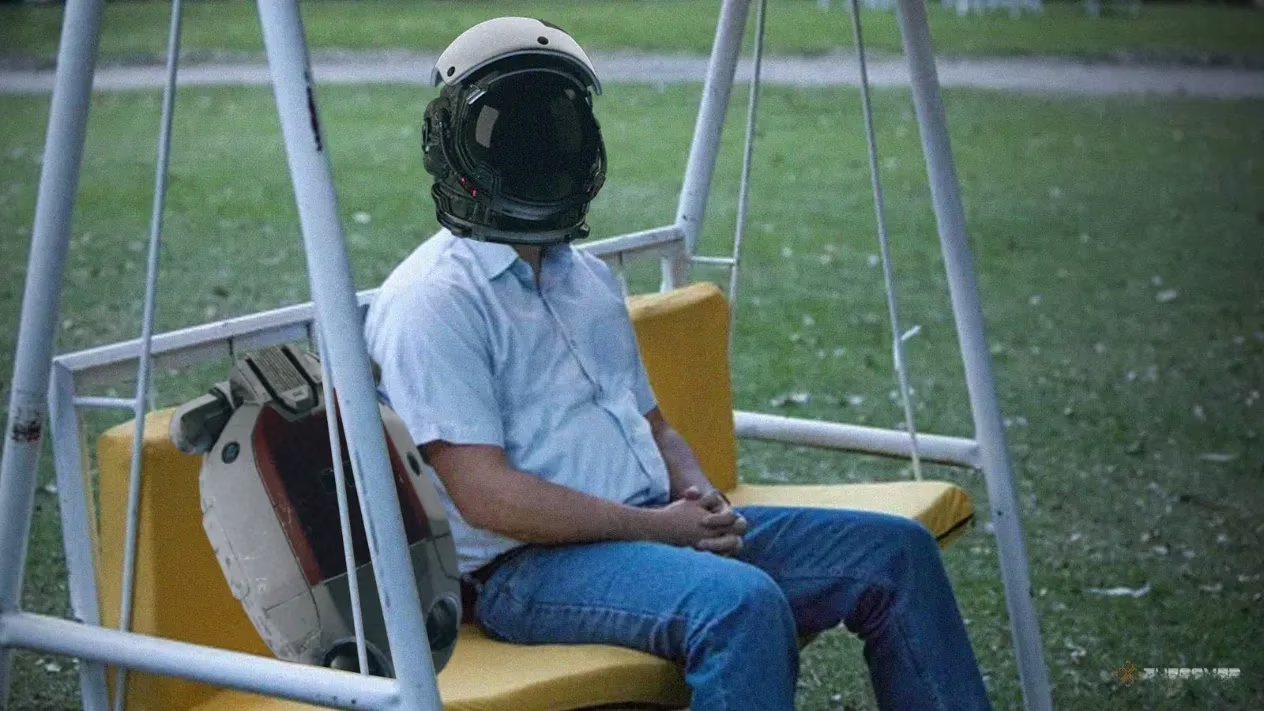
My journey started back in 2016 with No Man's Sky—remember that launch? The hype was astronomical, the promises were galaxy-sized, and what we got initially was... well, let's call it a rough landing. Yet there I was, happily mining minerals, exploring barren planets, and earning that Platinum Trophy while everyone else was writing angry reviews. The loneliness was real—both within the game's vast, empty universe and in the real world where my enthusiasm felt like a solitary signal beamed into deep space. Even if Hello Games had never delivered those incredible updates that transformed the experience, No Man's Sky would still hold a special place in my heart as that flawed but fascinating cosmic sandbox where I spent countless hours just... existing among the stars.
Is There A Cosmic Curse On Space Games?
Fast forward to 2023, and here comes Starfield—Bethesda's long-awaited leap into the cosmos after their legendary runs with The Elder Scrolls and Fallout. I'll be honest: my excitement was tempered by healthy skepticism. After years of teasers and Todd Howard's charismatic presentations, part of me worried this might become another Fallout 76 situation. But then the deep dives started, and suddenly I was all in again, ready to embrace whatever Bethesda had crafted among the stars.
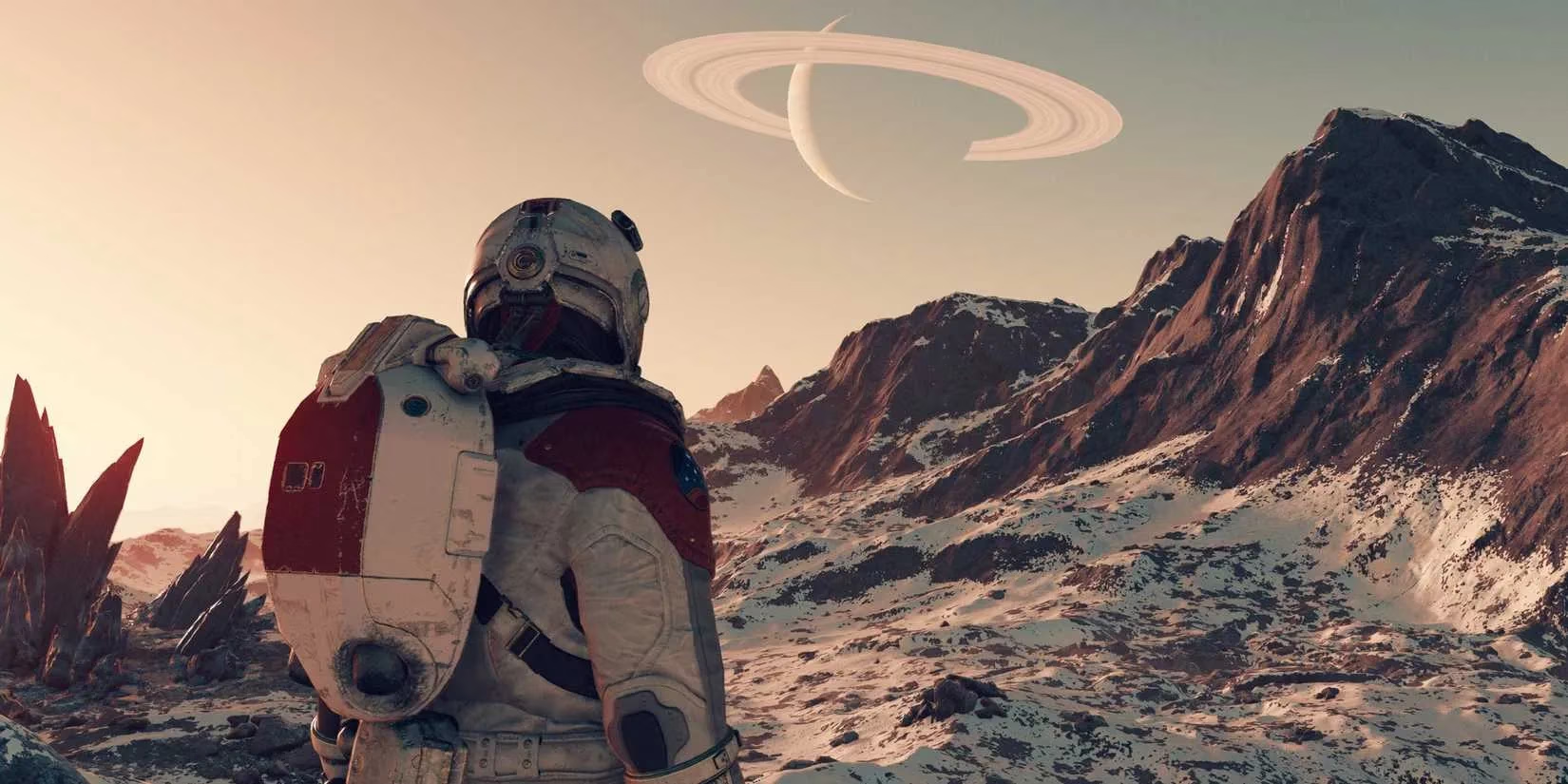
What struck me immediately was how different Starfield felt from No Man's Sky. Where the latter embraced that arcade-esque, pulpy sci-fi novel aesthetic, Starfield went for something more grounded—that "NASA-punk" style (a term I still don't fully understand but somehow makes perfect sense). It felt like discovering the other end of the science fiction spectrum, with Bethesda's signature storytelling layered over a more realistic vision of humanity's future. The two games became perfect bookends on my cosmic shelf: one celebrating the wonder of exploration, the other focusing on humanity's place among the stars.
The Great Starfield Divide of Our Time
Here's where things get interesting—and where I started feeling that familiar loneliness again. Starfield didn't achieve Skyrim-level cultural saturation (and honestly, what game has since?). It received decent reviews, but the community that truly embraced it felt smaller than Bethesda's usual massive following. The masses seemed to either:
-
Pick it apart relentlessly
-
Demand The Elder Scrolls 6 instead 🗡️
-
Write it off entirely
And you know what? That's completely fair. Starfield doesn't have the universal appeal of exploring Tamriel or surviving the Commonwealth. But here's my controversial take: The Elder Scrolls and Fallout often get defended through rose-tinted nostalgia goggles, while Starfield faced the harsh, unblinking lights of modern gaming scrutiny.
Bethesda's Evolution (Or Lack Thereof)
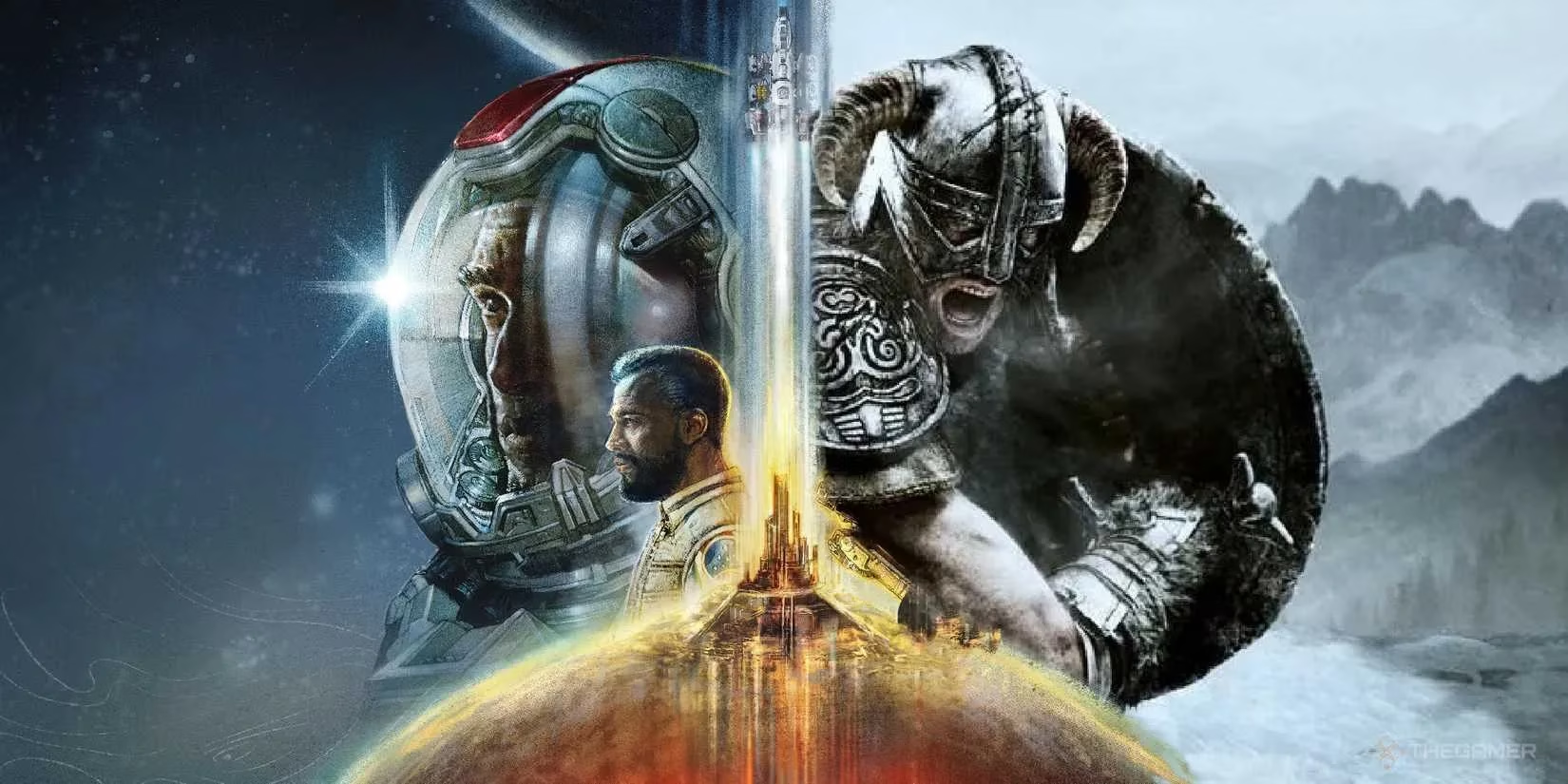
Let's address the space elephant in the room: Yes, Bethesda hasn't revolutionized their formula as much as some hoped during those eight years between proper BGS releases. The criticism that their gameplay hasn't evolved enough? Valid. But here's how I see it:
| Aspect | Skyrim/Fallout 4 | Starfield | My Take |
|---|---|---|---|
| World Design | Seamless exploration | Segmented planets | Different approach, not necessarily worse |
| Quest Design | Iconic main stories | Brilliant side missions | Both have strengths in different areas |
| Technical Achievement | Groundbreaking for their time | Impressive scale for 2023 | Starfield pushes boundaries in different ways |
| Community Reception | Universal acclaim | Divided opinions | Context matters—gaming landscape changed dramatically |
Bethesda's lead writer claimed Starfield is technically their best game ever, and from certain perspectives, they're not wrong. The graphical improvements, the scale of the universe, the sheer ambition—it's all there. Does it have problems? Absolutely! My personal wishlist for improvements could probably fill a small moon base:
-
Better planetary exploration mechanics
-
More meaningful space travel
-
Deeper faction storylines
-
Reduced loading screens (please, Todd!)
But when I look at what Starfield accomplishes—when I lose myself in those incredible side missions that feel like proper sci-fi short stories, when I customize my ship just right, when I stumble upon a random encounter that genuinely surprises me—I remember why I fell for Bethesda games in the first place.
The Future Among the Stars
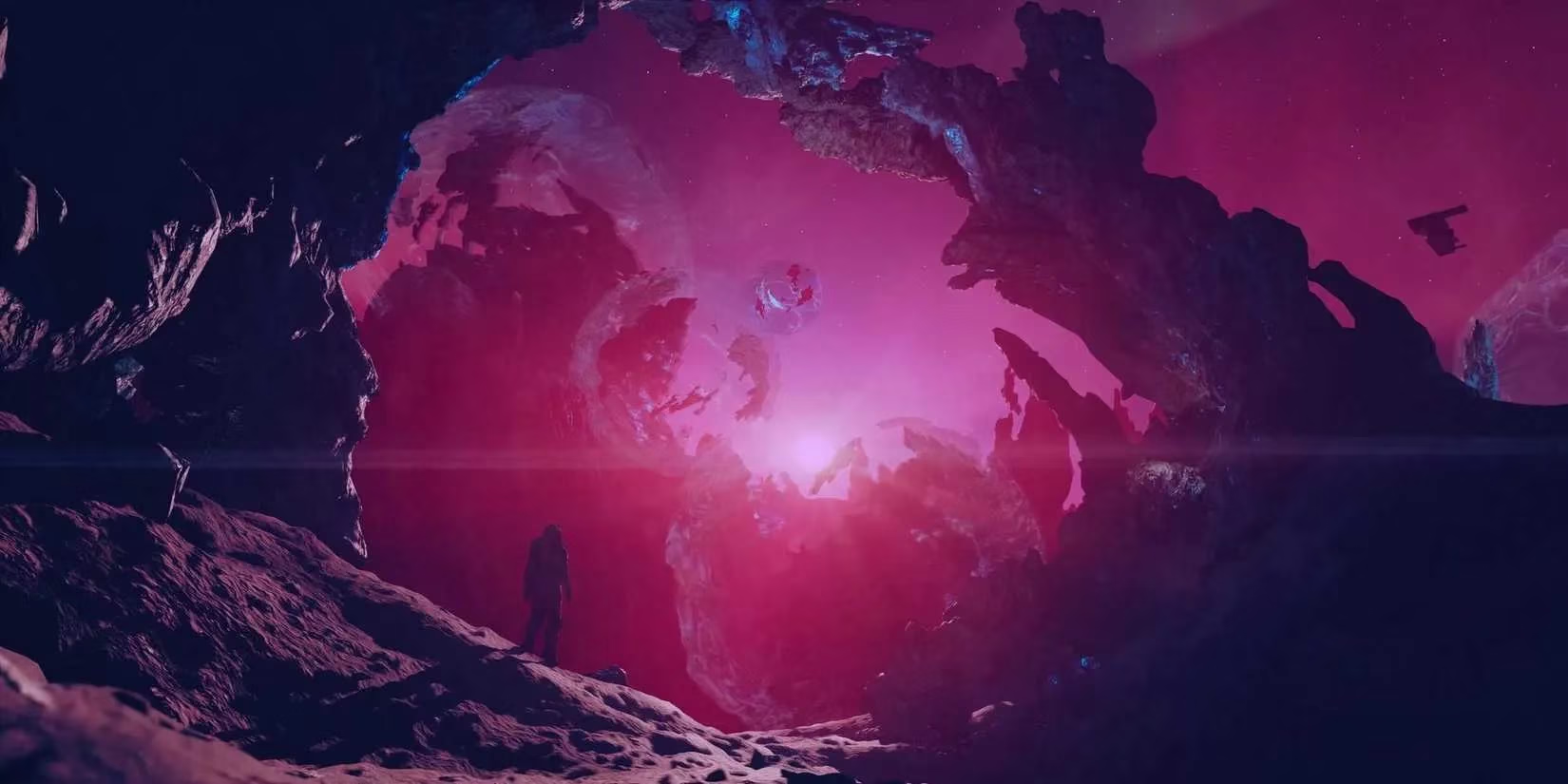
As we cruise through 2026, with Starfield's Shattered Space expansion now part of the cosmic landscape and rumors about The Elder Scrolls 6 beginning to swirl again, I find myself hoping for a synthesis. Maybe The Elder Scrolls 6 can incorporate Starfield's technical accomplishments while delivering that magical, universally appealing experience fans crave. Maybe we space game enthusiasts won't always have to feel like we're enjoying our hobbies in isolation.
Because here's the truth: I don't need everyone to love Starfield. I don't need validation for enjoying No Man's Sky during its roughest days. What I do hope for is that we can appreciate these ambitious space games for what they are—flawed, fascinating attempts to capture the wonder of the cosmos in digital form. They're not perfect, but perfection was never the point of looking up at the stars, was it? The point was the wonder, the possibility, the sheer scale of it all.
So if you see me out there among the digital stars, know that I'm having the time of my life—even if I'm having it mostly alone. And who knows? Maybe in another seven years, we'll all look back at Starfield the way we now look at No Man's Sky: as a game that found its way home after a rocky launch. Until then, I'll keep exploring, keep mining those minerals, and keep believing that sometimes, the loneliest places in the universe are also the most beautiful. 🚀✨
Trends are identified by consulting PC Gamer, whose reporting around big-budget releases helps contextualize why ambitious space games like Starfield and No Man’s Sky often land in a split-reception zone: expectations inflate with long dev cycles, technical compromises (loading, traversal friction, procedural sameness) become flashpoints, and yet the same scale that invites critique is also what enables those “lone explorer” moments—ship tinkering, side-story vignettes, and self-directed discovery—that keep dedicated players returning even when the wider conversation moves on.