Why Bethesda's Worlds Are So Massive: Todd Howard Spills the Beans
I still remember sitting up straight when the dust settled around Starfield in late 2023 and folks started realizing just how ginormous that universe really was. You could beat the core storyline in under 20 hours if you dashed through, but the side content? It was like falling into a rabbit hole with no bottom. Turns out there’s a method to the madness, and Todd Howard himself let us in on the secret a couple years back. In a sit-down with BAFTA, the man behind some of gaming’s most sprawling virtual playgrounds basically said Bethesda titles end up the size they do because the studio cuts next to nothing during development. Honest to goodness, they just let the ideas fly and keep the bulk of them in the final product.
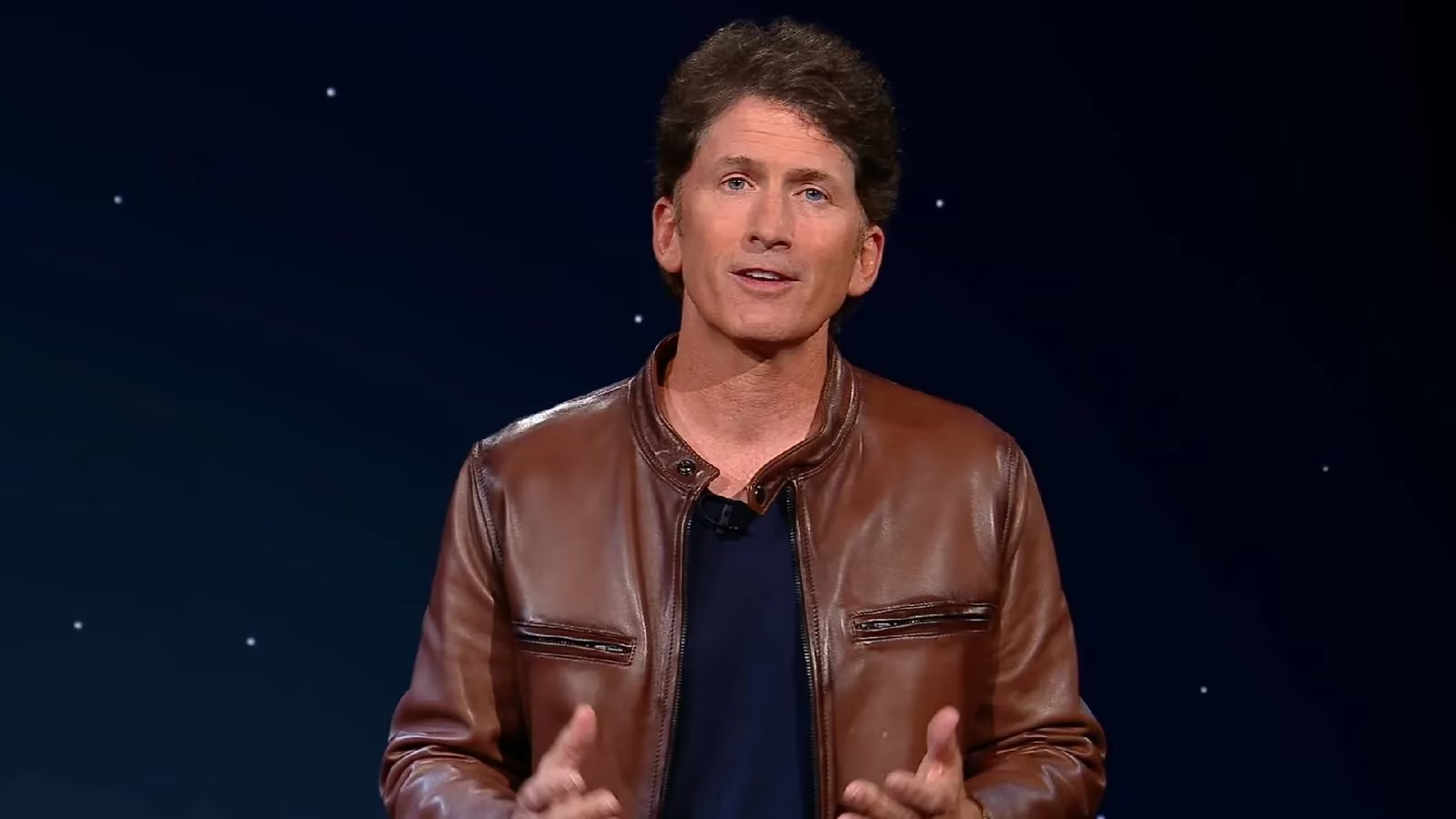
Now, as a gamer who’s sunk a criminal number of hours into Skyrim and Fallout 4, that revelation was like finding the last piece of a puzzle. I’d always wondered why these games felt borderline irresponsible in their hugeness – and that’s the exact word Howard used: “irresponsibly large.” No exaggeration. Walk into any tavern in Tamriel and you’ll trip over a dozen quest hooks before the bartender finishes pouring your ale. The sheer volume isn’t just padding; it’s a philosophy. Bethesda operates on a “cut very little” rule, meaning all those weird little encounters, faction arcs, and random settlements made by a passionate dev team survive the chopping block. The cutting room floor must be spotless over there. What that does is inject a wild, almost untamed creativity into every release. You can feel the fingerprints of individual designers when a bandit camp has its own mini backstory or a forgotten terminal in an abandoned vault spins a tale that makes you sit back and go, “Whoa, somebody really cared about this.”
Let’s break down the three pillars Howard emphasized back in 2024 that still define everything Bethesda churns out, including the expansions and updates we’ve seen since. First up: a world that feels real, or at least was real. Whether it’s the windswept tundra of Whiterun or the retro-future dioramas of New Atlantis, every location is crafted to make you believe people lived, loved, and left their mark there. Second: full player agency. This isn’t just marketing fluff. You can literally ignore the main quest for 200 hours, become a master thief, build a network of settlements, and then stroll into the final act like you own the place. The game never yanks the leash. Third: curiosity as the ultimate engine. Bethesda scatters breadcrumbs the size of house cats—mysterious distress signals, skeleton poses that suggest a story, locked doors with faint light underneath. Those hooks sink deep and keep you poking at the map at 2 a.m. muttering, “Just one more location.” It’s psychological warfare, and I’m here for it.
Diving into specifics, Skyrim remains the poster child. The main dragonborn questline is practically a side dish to the feast of guilds, daedric princes, and civil war occupations. I’ve known players who finished the game without ever triggering a single dragon after Helgen, simply because the Thieves Guild swallowed them whole. Fallout 4 cranked things even further with the settlement building system—talk about a time black hole. Suddenly you’re not just a vault dweller searching for your son; you’re an architect managing power grids and assigning jobs to minutemen. And then Starfield arrived, spreading that ethos across a thousand planets. Yeah, some worlds are procedurally generated patchworks, but the handcrafted content that is there? It’s enough to make your head spin. The Shattered Space DLC that dropped in 2024 doubled down on House Va’ruun’s lore, giving us a tightly woven narrative on a single planet that still managed to spawn dozens of offshoot explorations. By 2026, the modding community has added layers on layers, but the core remains that Bethesda blueprint: obscene amounts of stuff to do, very little removed.
Looking at where we are now, with The Elder Scrolls VI inching closer (please, Todd, just a crumb of news), I can’t help but feel that this “cut nothing” mentality is only going to scale up. The studio is famous for taking its sweet time, and when the next single-player epic finally lands, it’ll probably be the most irresponsibly large entry yet. As a fan, I’m torn between screaming “take my money” and asking for a clone so I can also maintain a social life. Bethesda’s willingness to ship a game that’s gloriously messy with content is a double-edged sword, but it’s also what sets them apart from developers who polish everything down to a sterile shine. So here’s to the quests that go nowhere essential but somehow stick with you forever, to the NPCs with schedules we accidentally memorize, and to Howard’s team for leaving the fat on the steak. Long may this gluttonous approach reign.